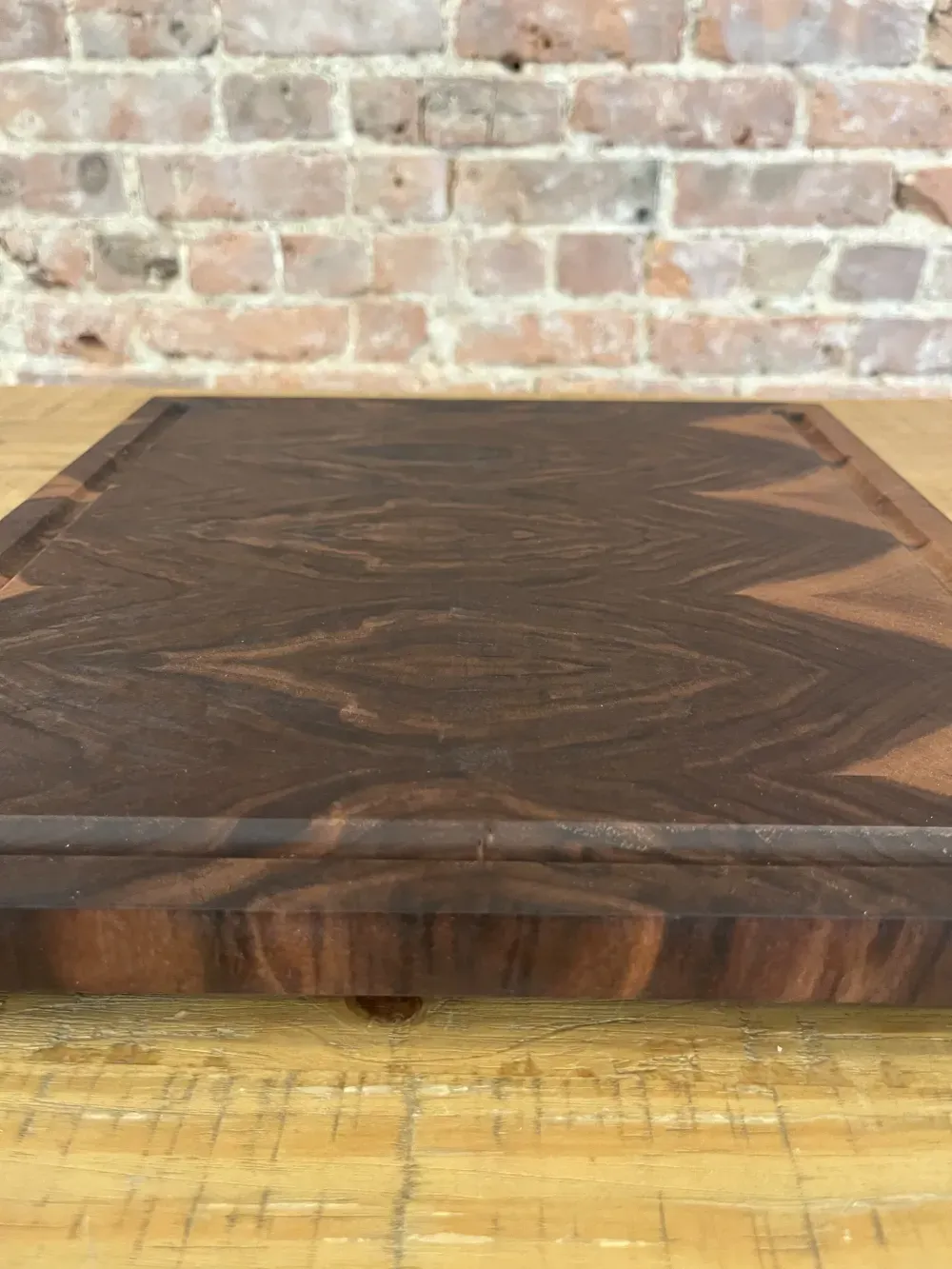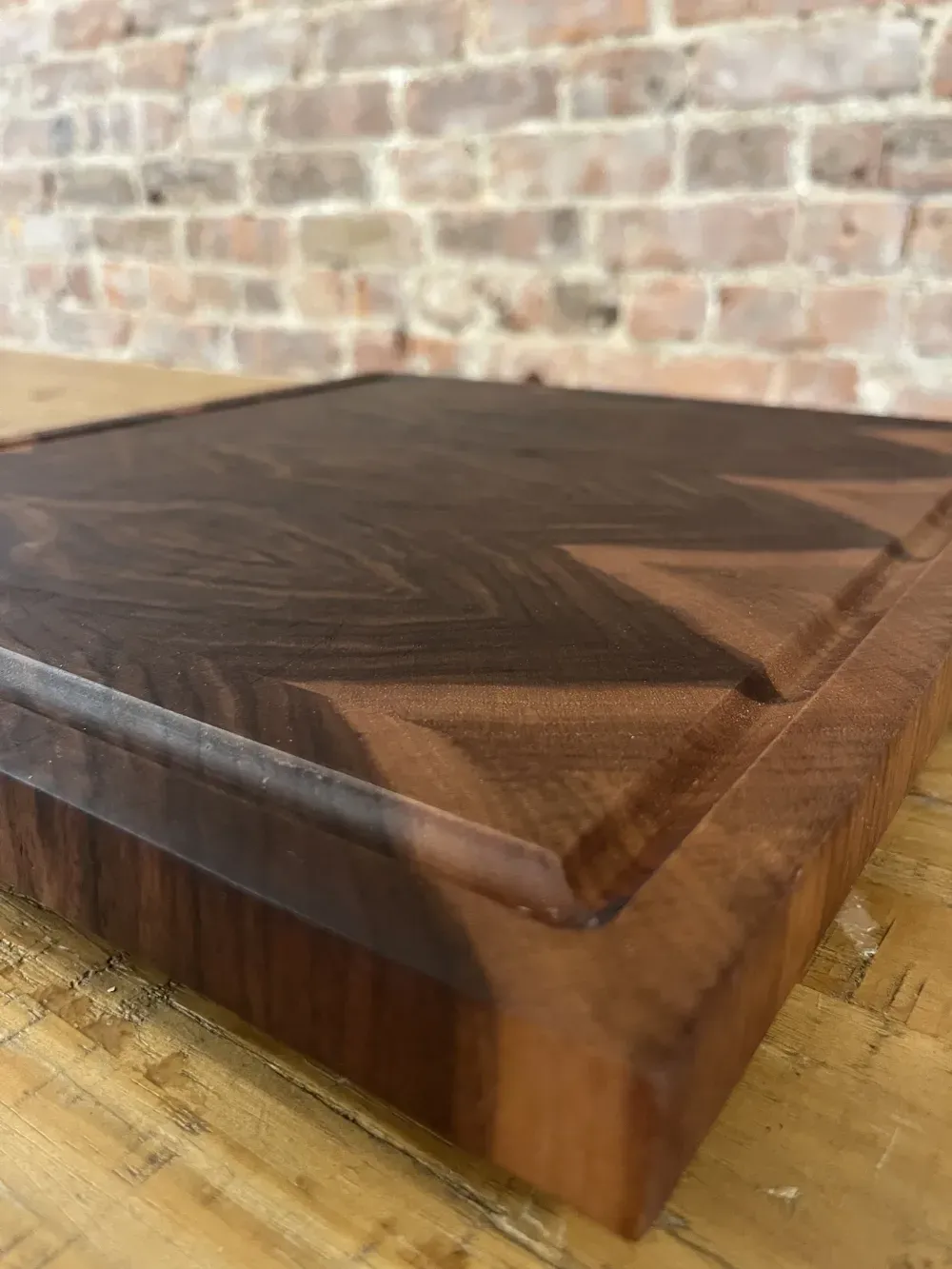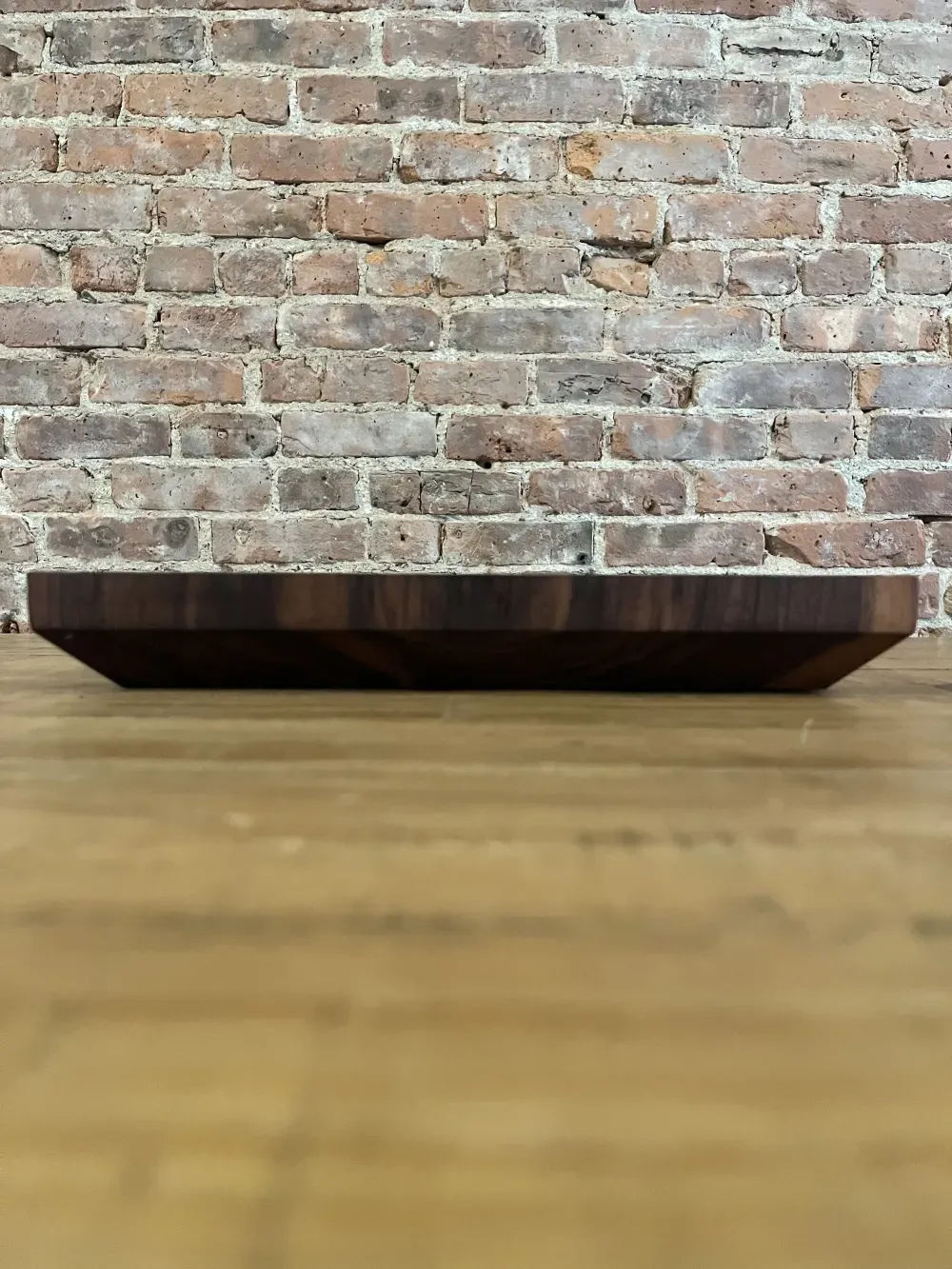
Cutting Boards
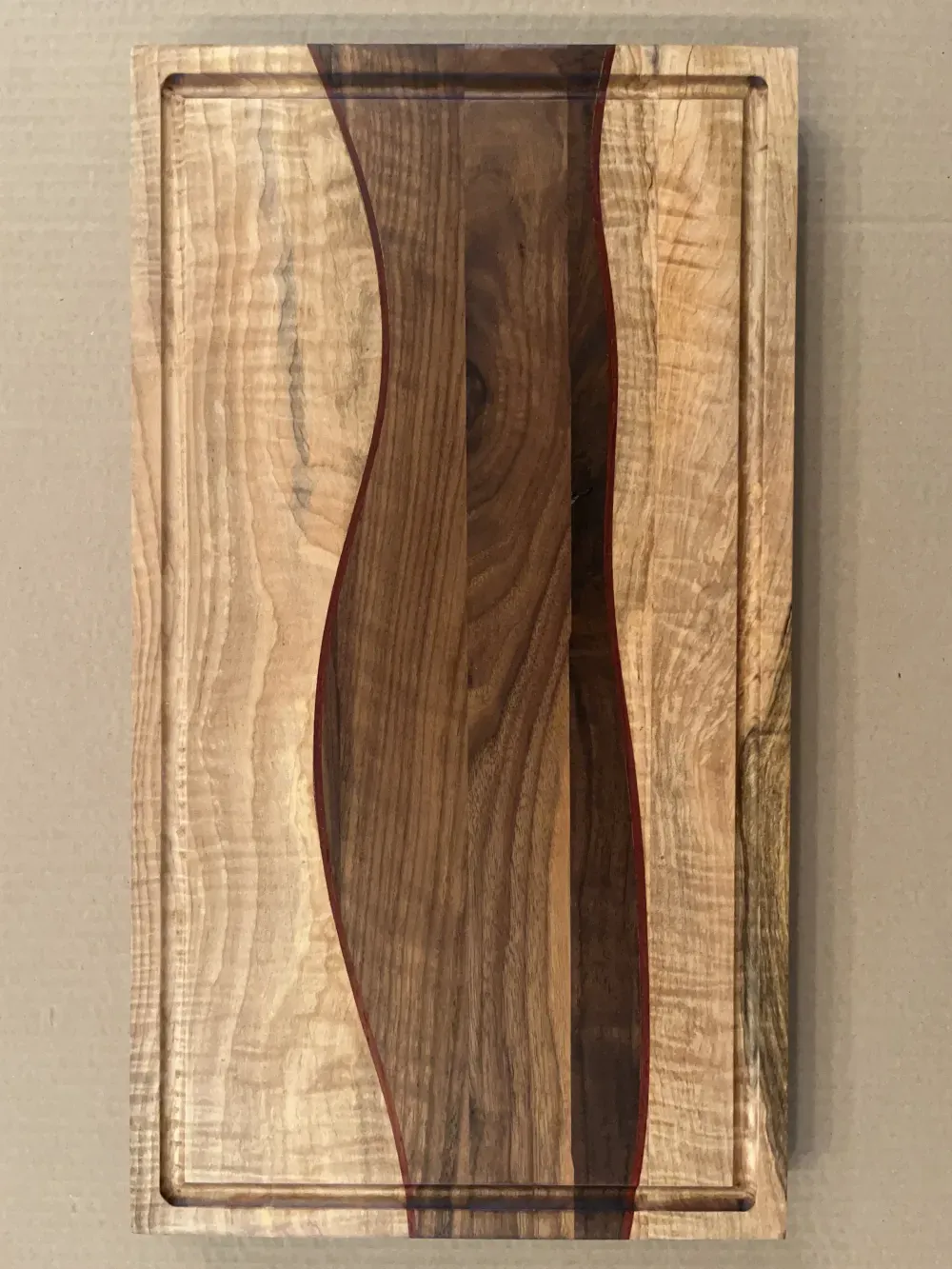
River Cutting Boards
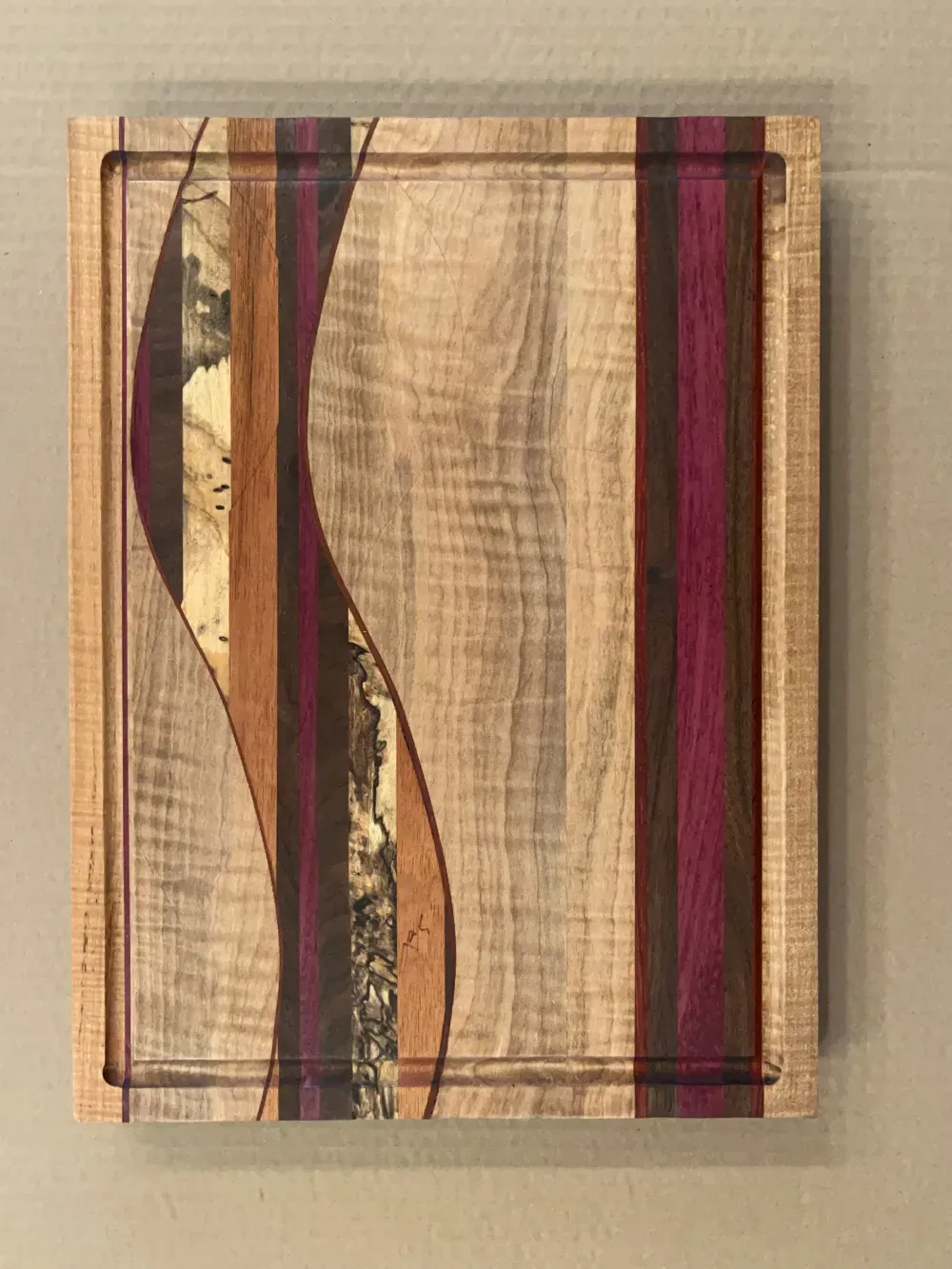
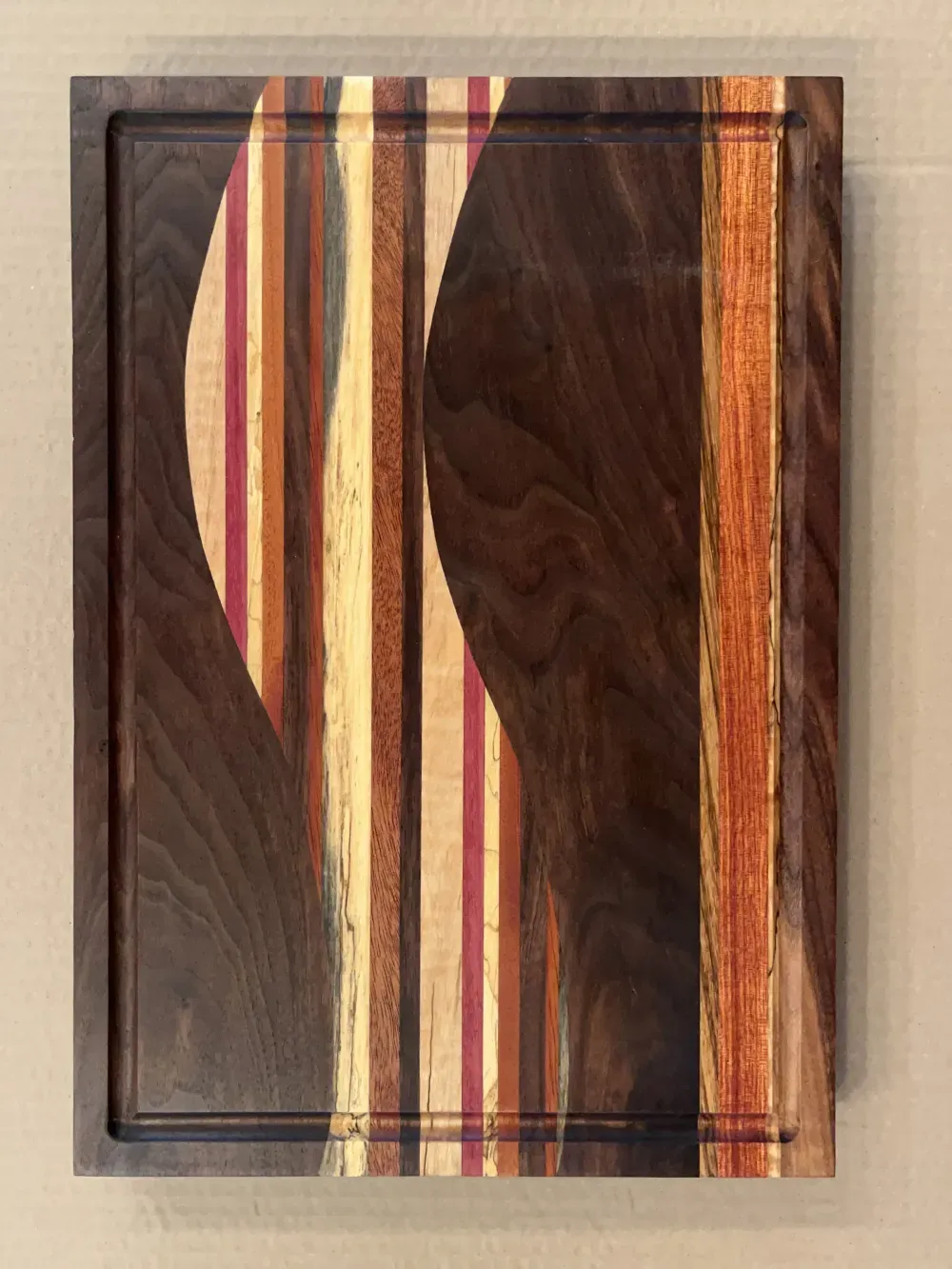
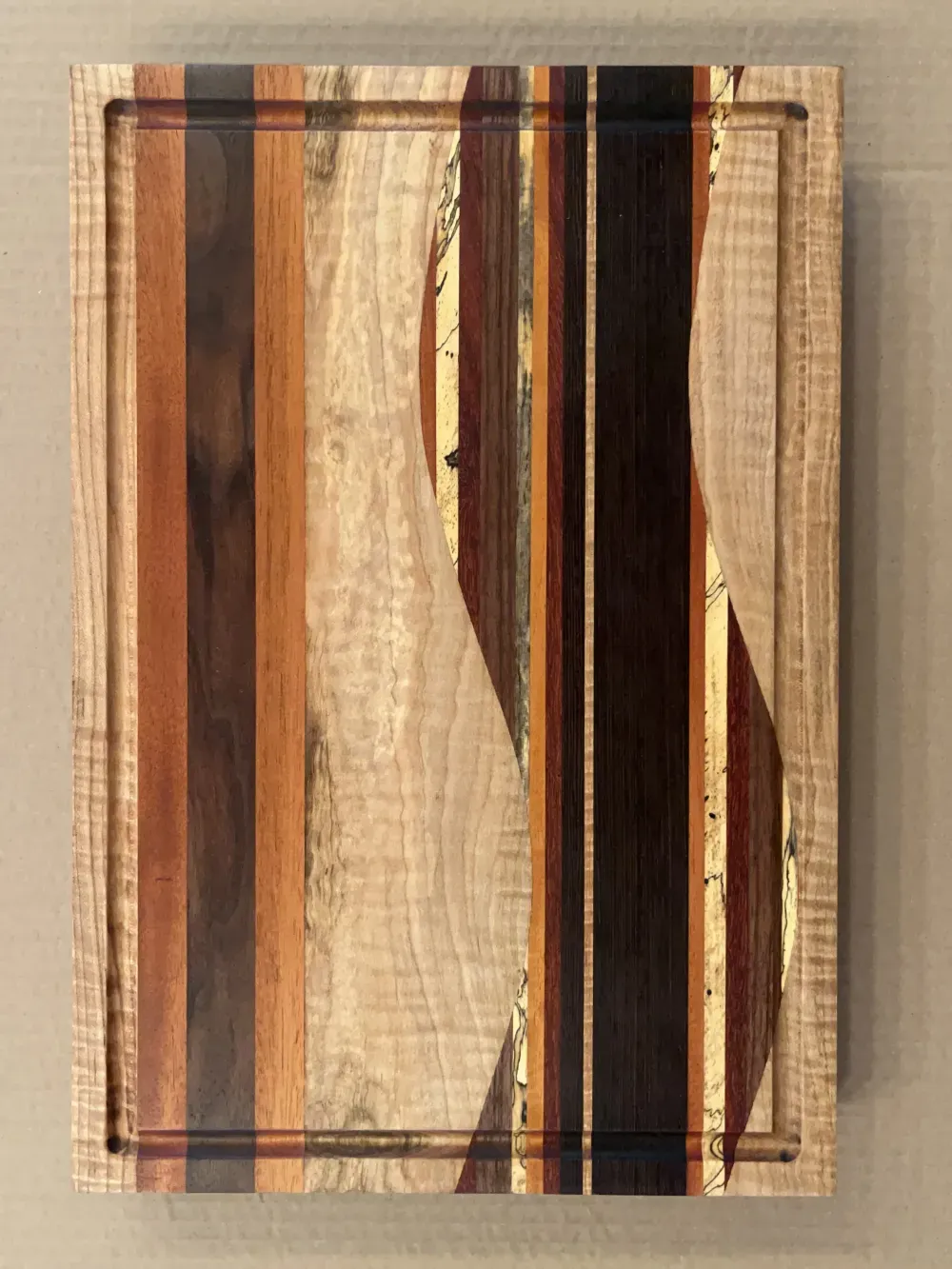
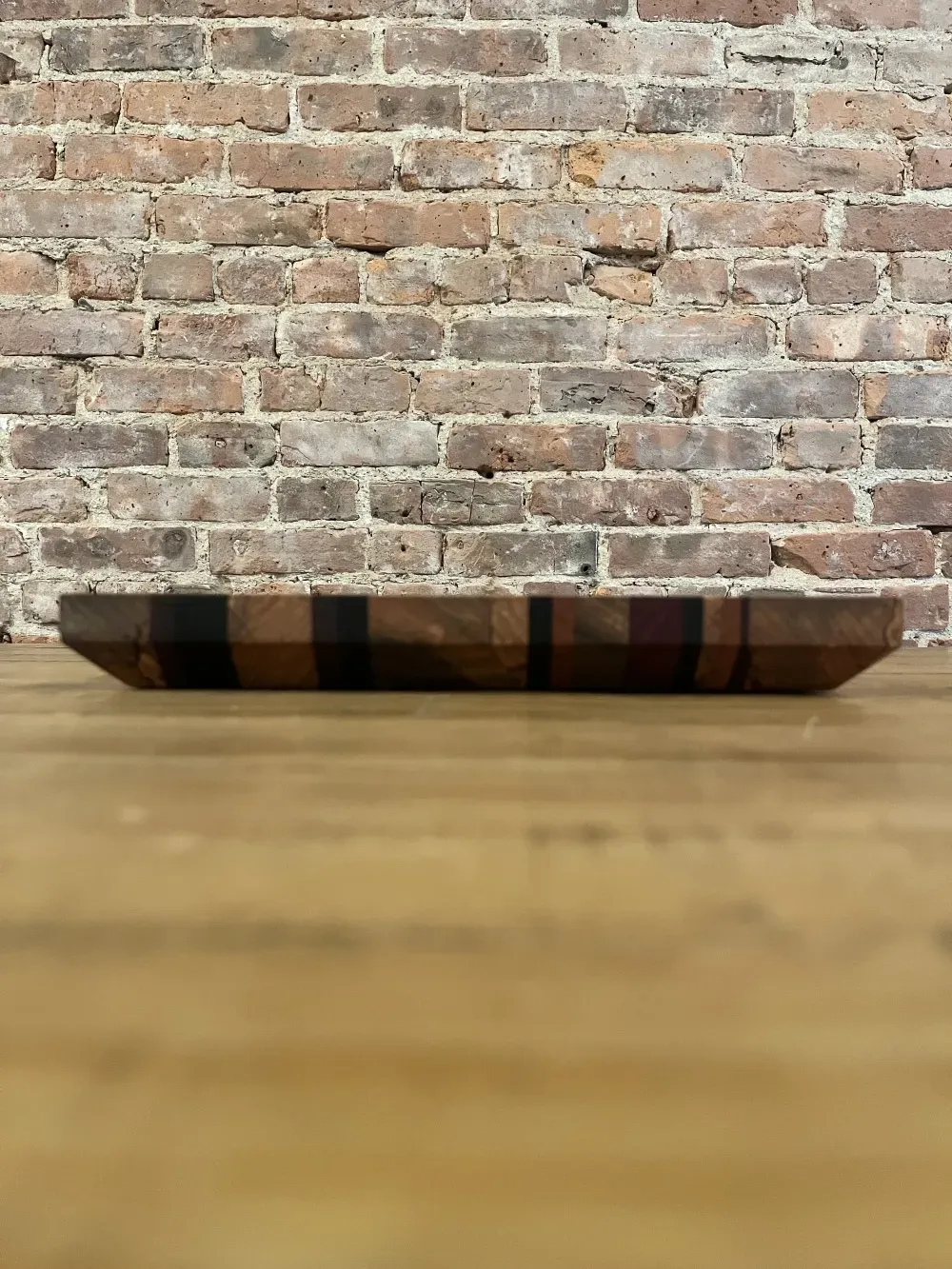
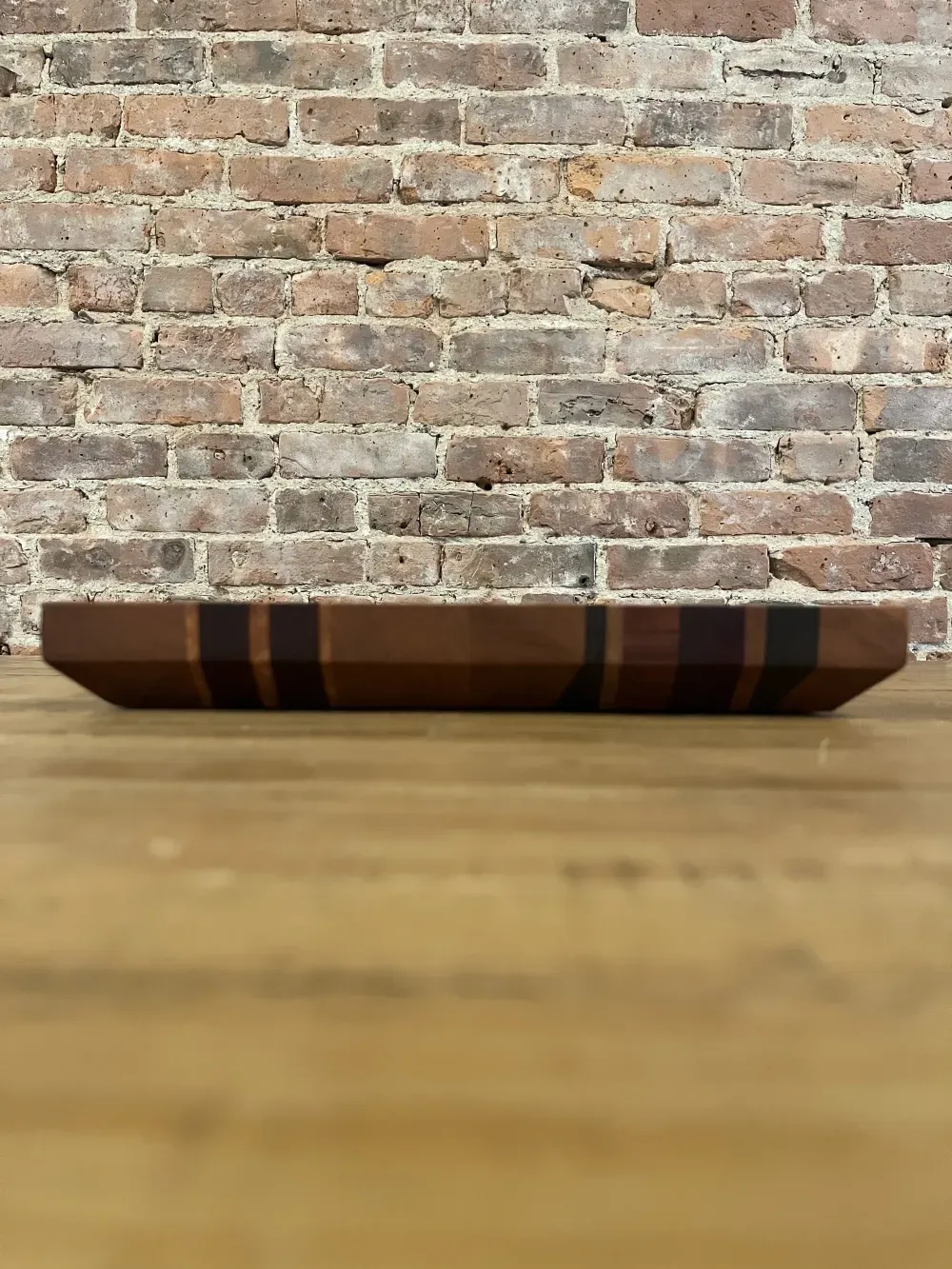
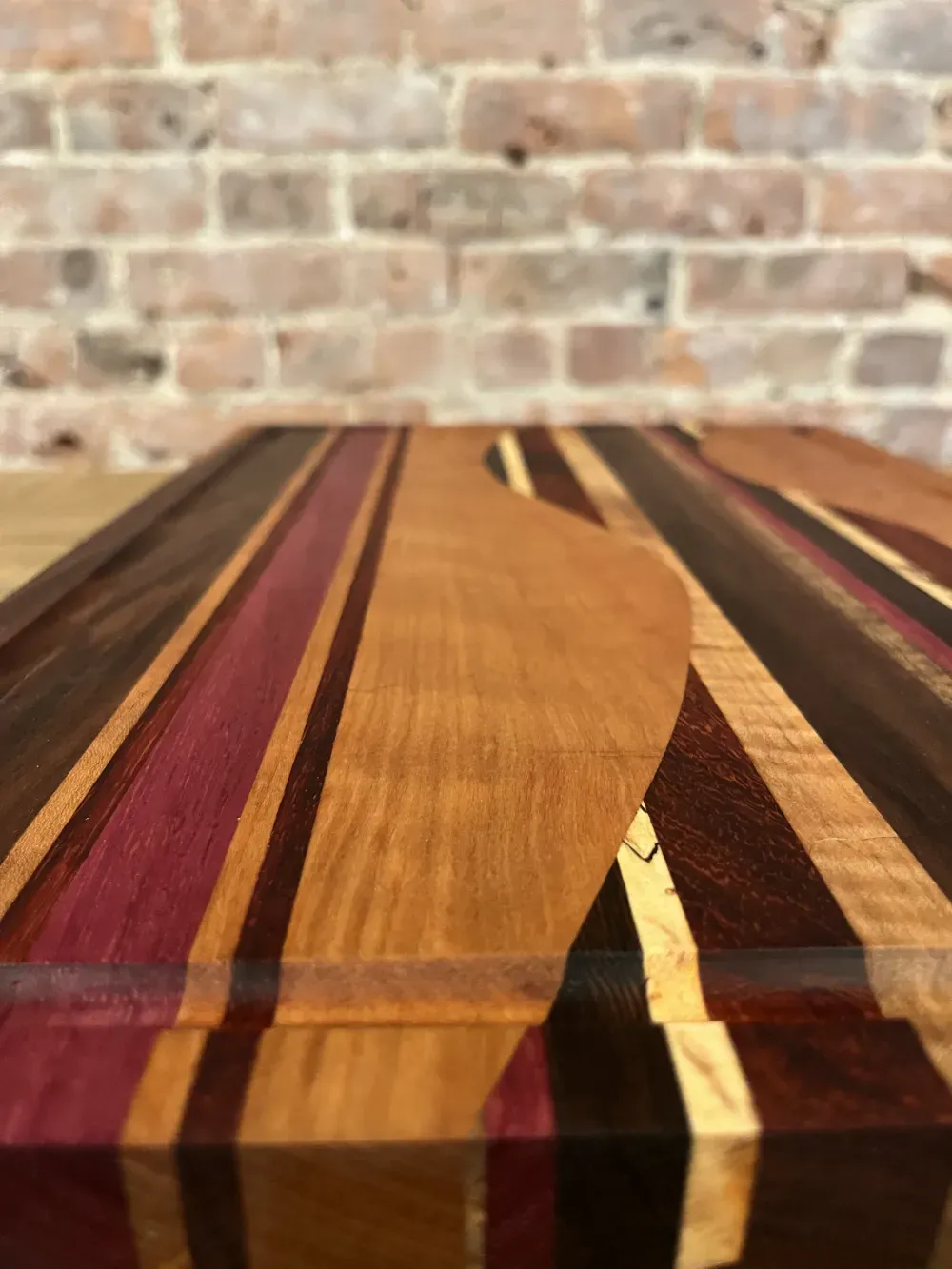
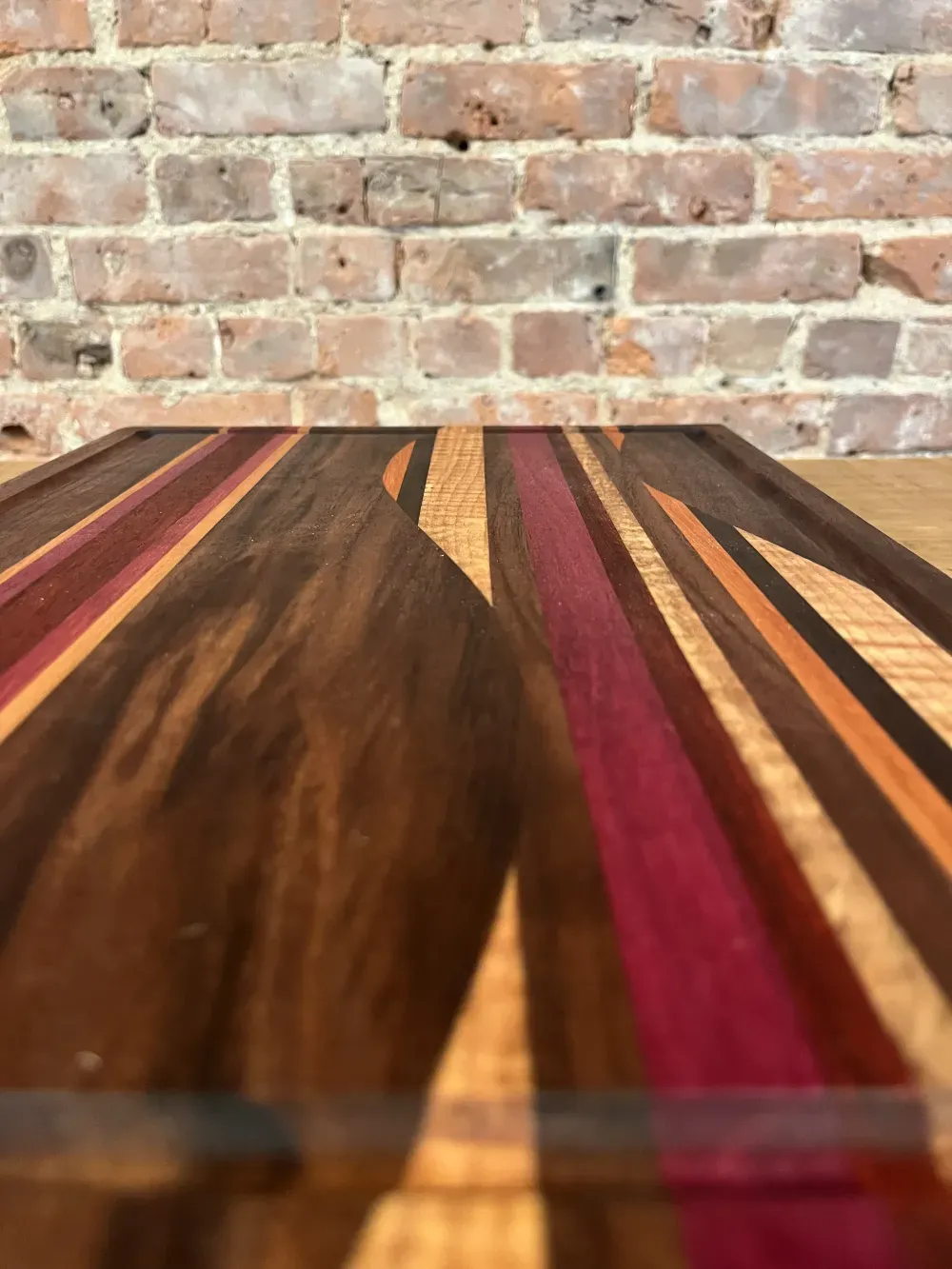
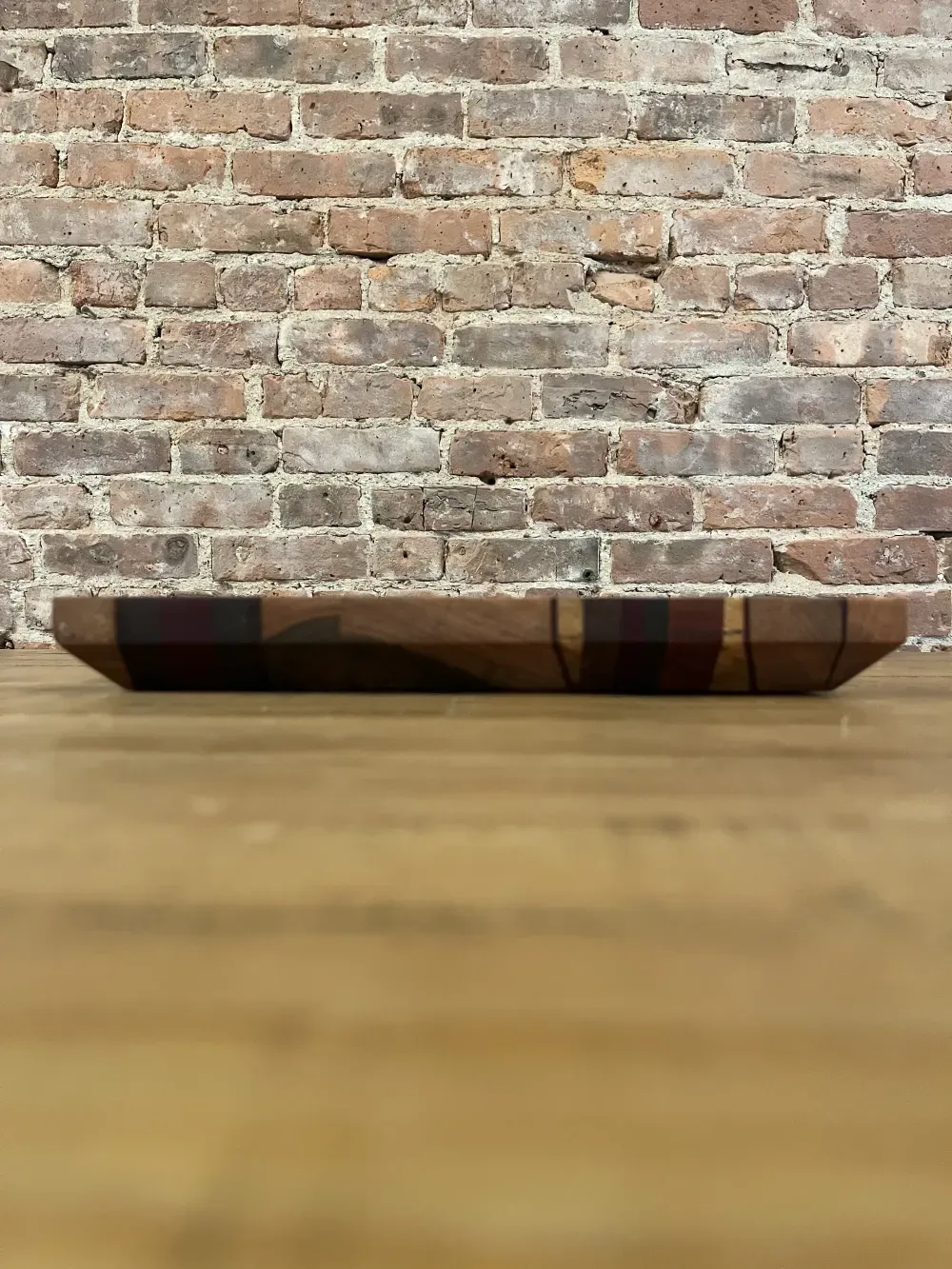
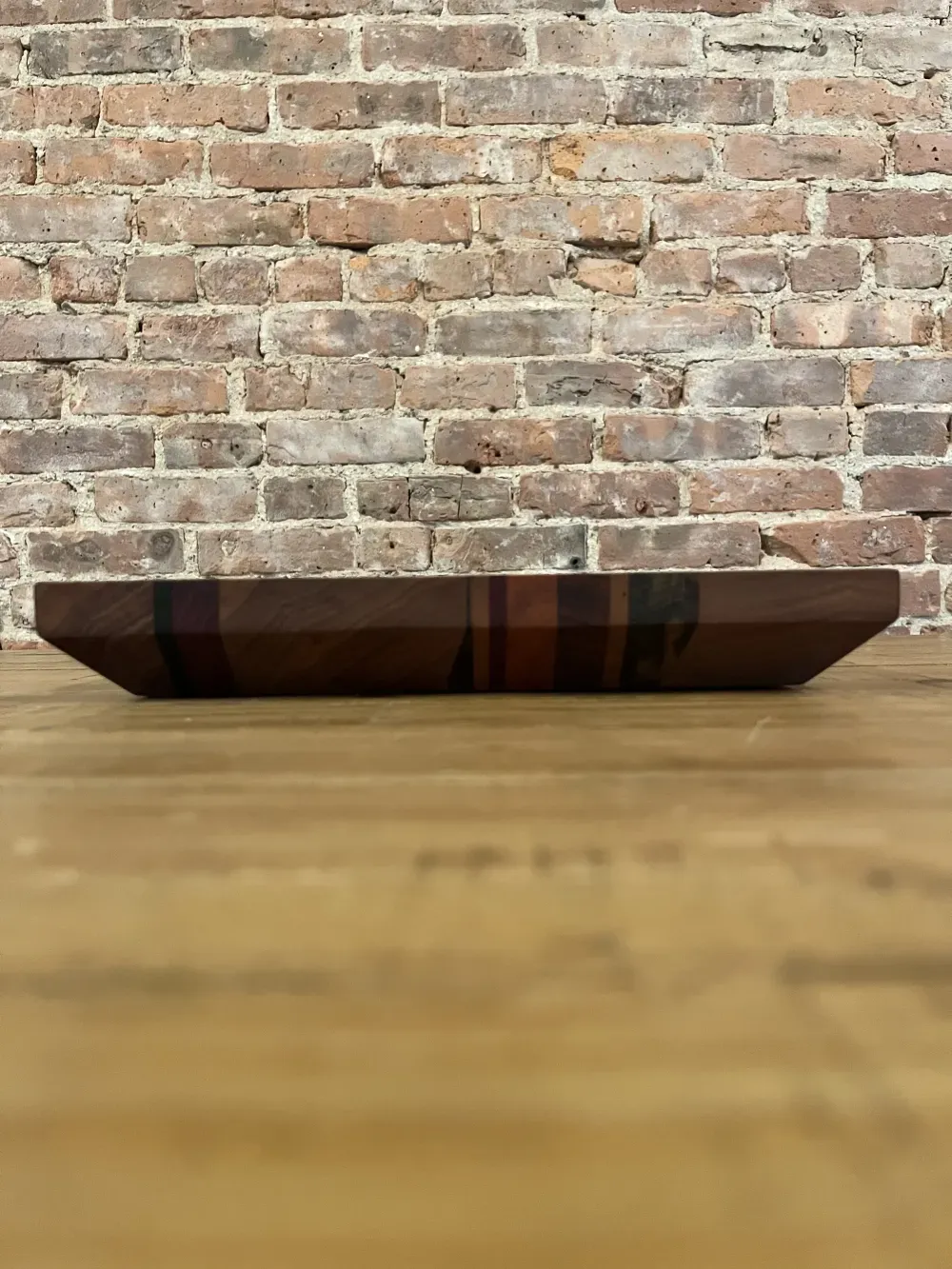
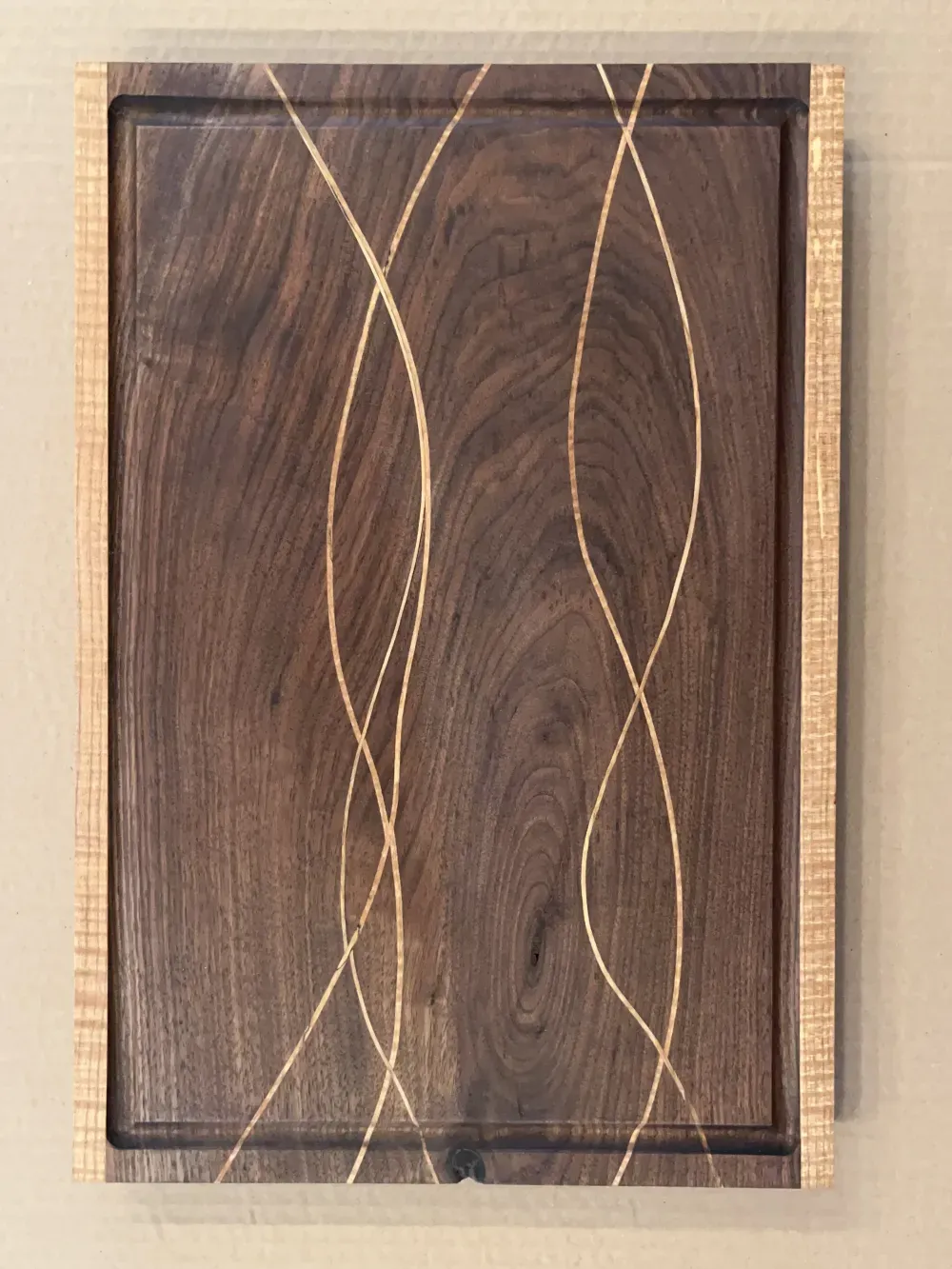
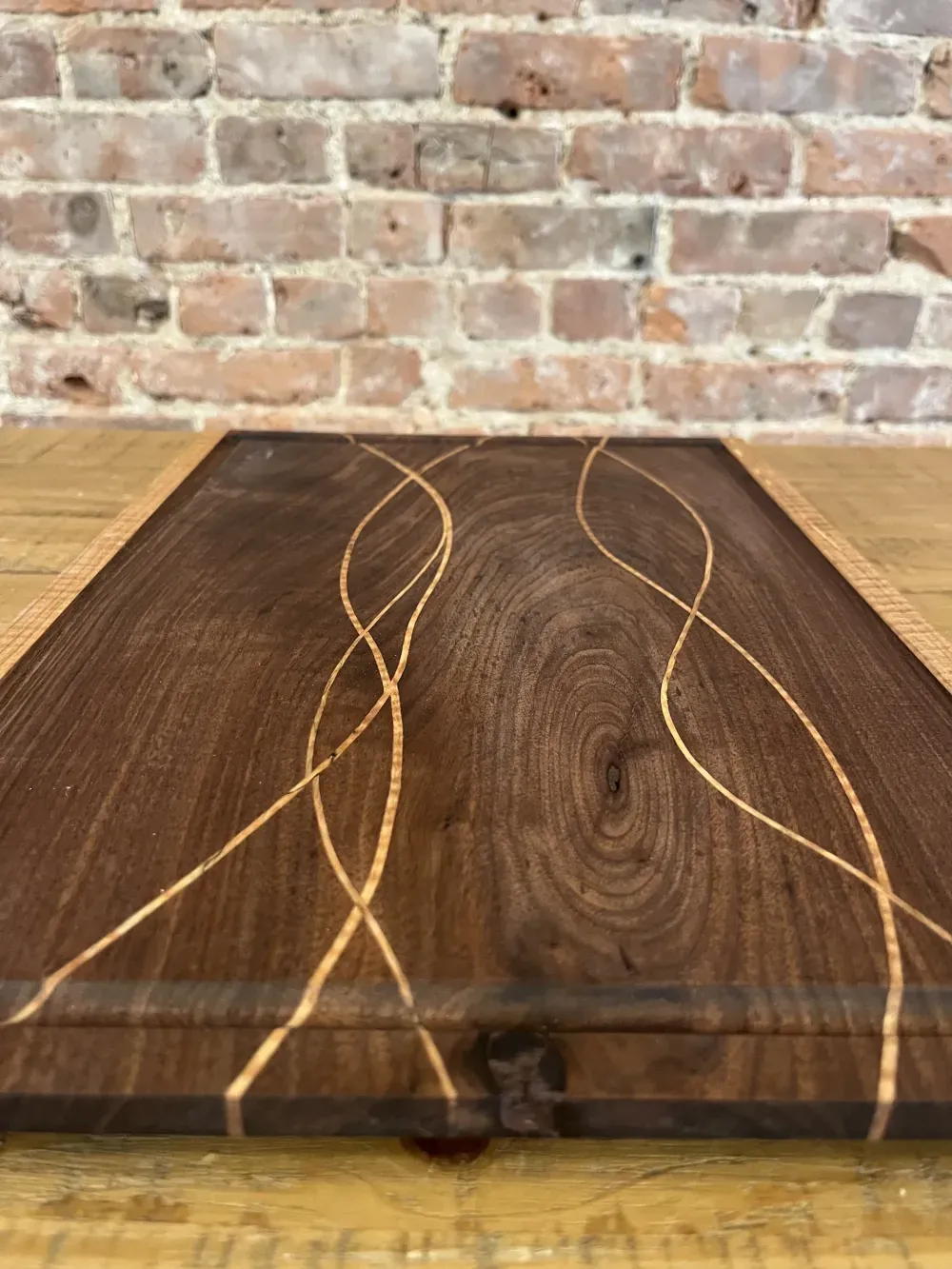
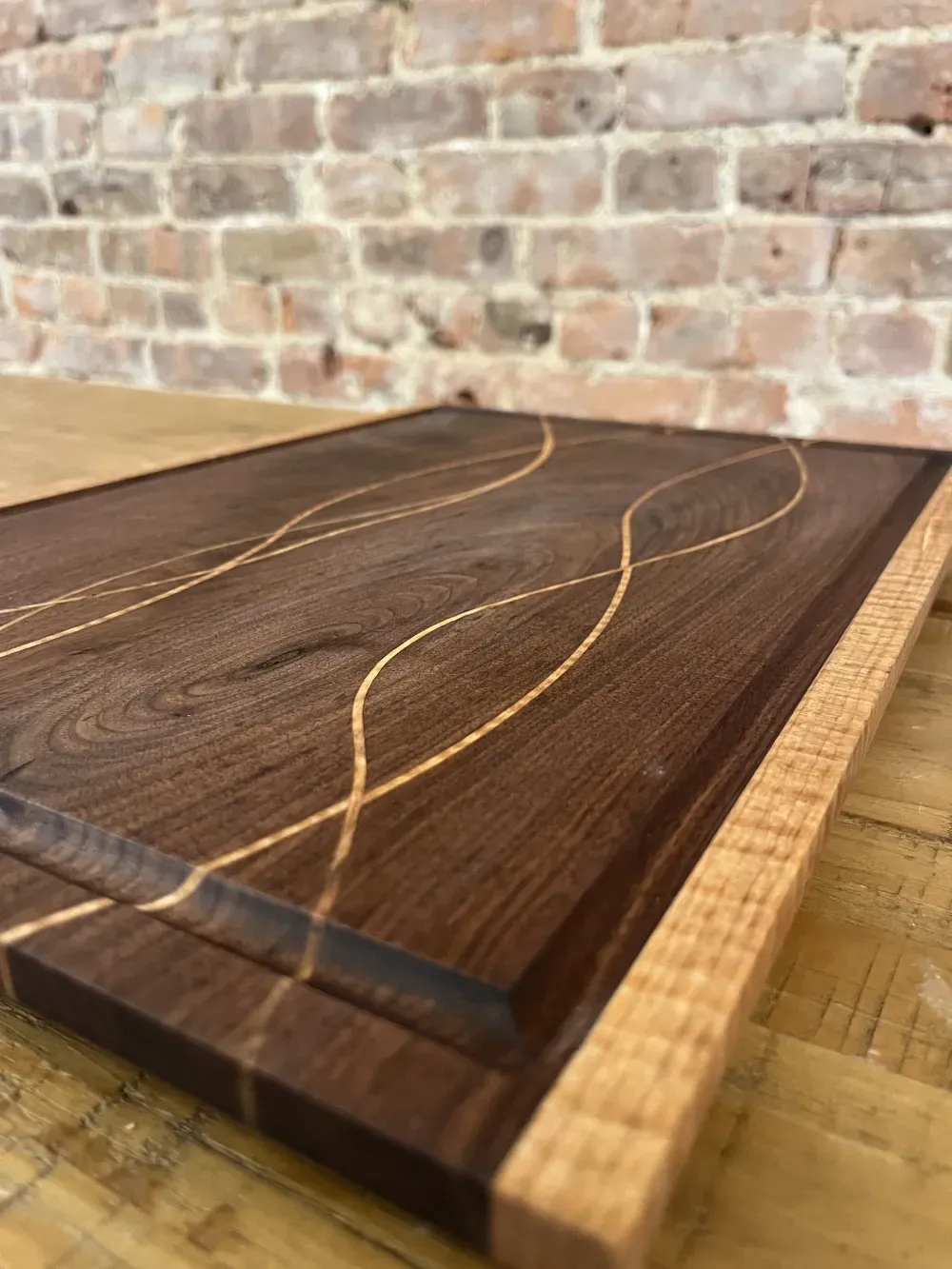
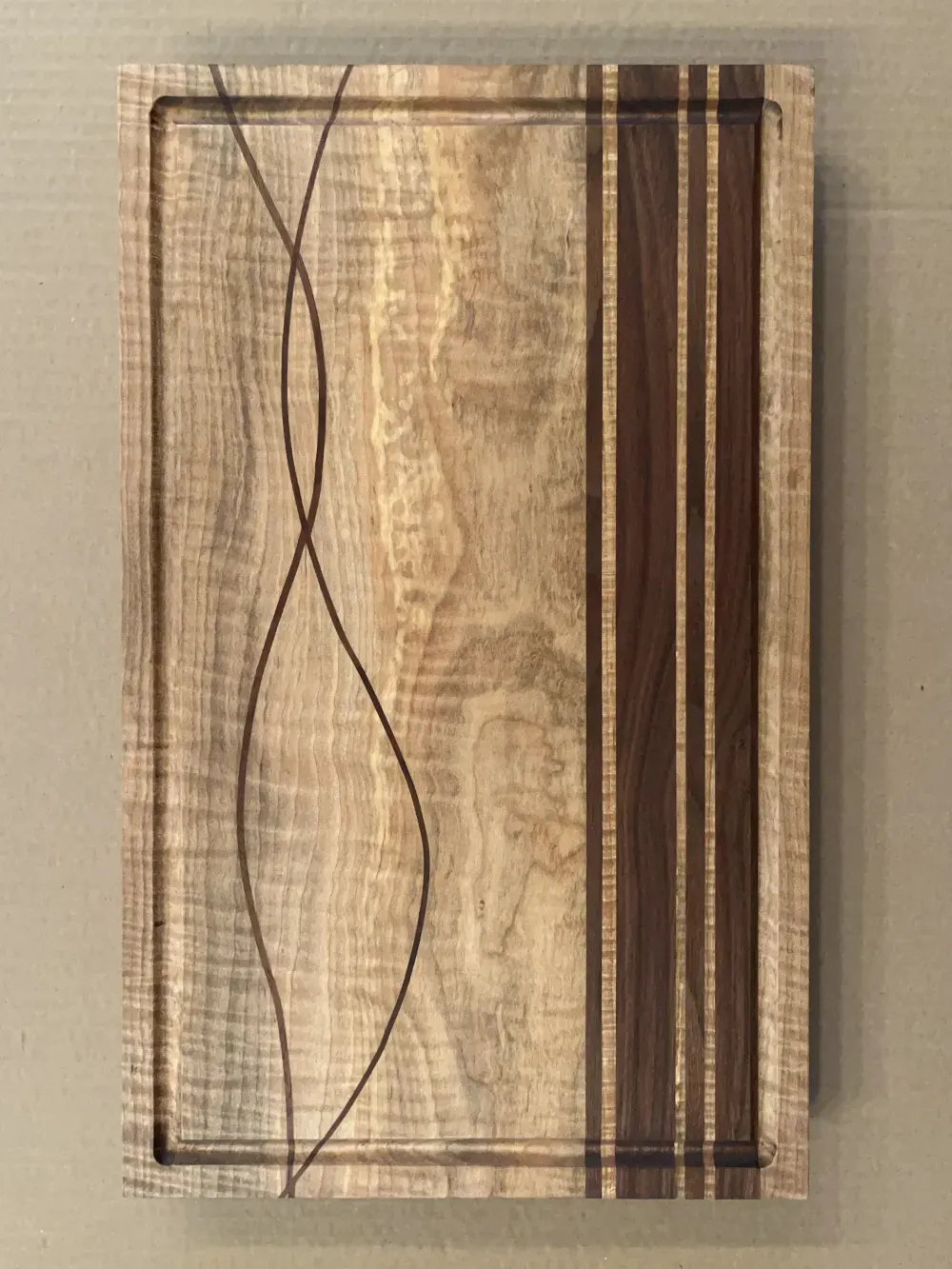
A dramatic evolution of the river cutting board concept — a bold stripe pattern that curves and swells like water carving through stone, rendered in a rich palette of exotic and domestic hardwoods. Each board is a one-of-a-kind composition, with the river’s shape and the exact species mix varying from piece to piece. These aren’t simply cutting boards; they are small landscapes created from wood.
There is a certain freedom in this process. The wood determines much of the story, but creativity determines how the pieces come together. A board can feel warm and earthy, bold and energetic, calm and understated, or dramatic and expressive—all from the natural colors and character of the woods themselves.
Together, these species are arranged as flowing vertical stripes that bow and taper along a serpentine edge, creating the illusion of a river winding through a striated landscape — every board reading almost like a topographic cross-section or an aerial view of a canyon. Each one is a balance between nature and imagination, where the grain becomes the terrain, the contrasting species become the colors of the landscape, and the flowing patterns echo the movement of a river.

















Checkerboard River Cutting Boards
A Modern Twist on a Classic Pattern
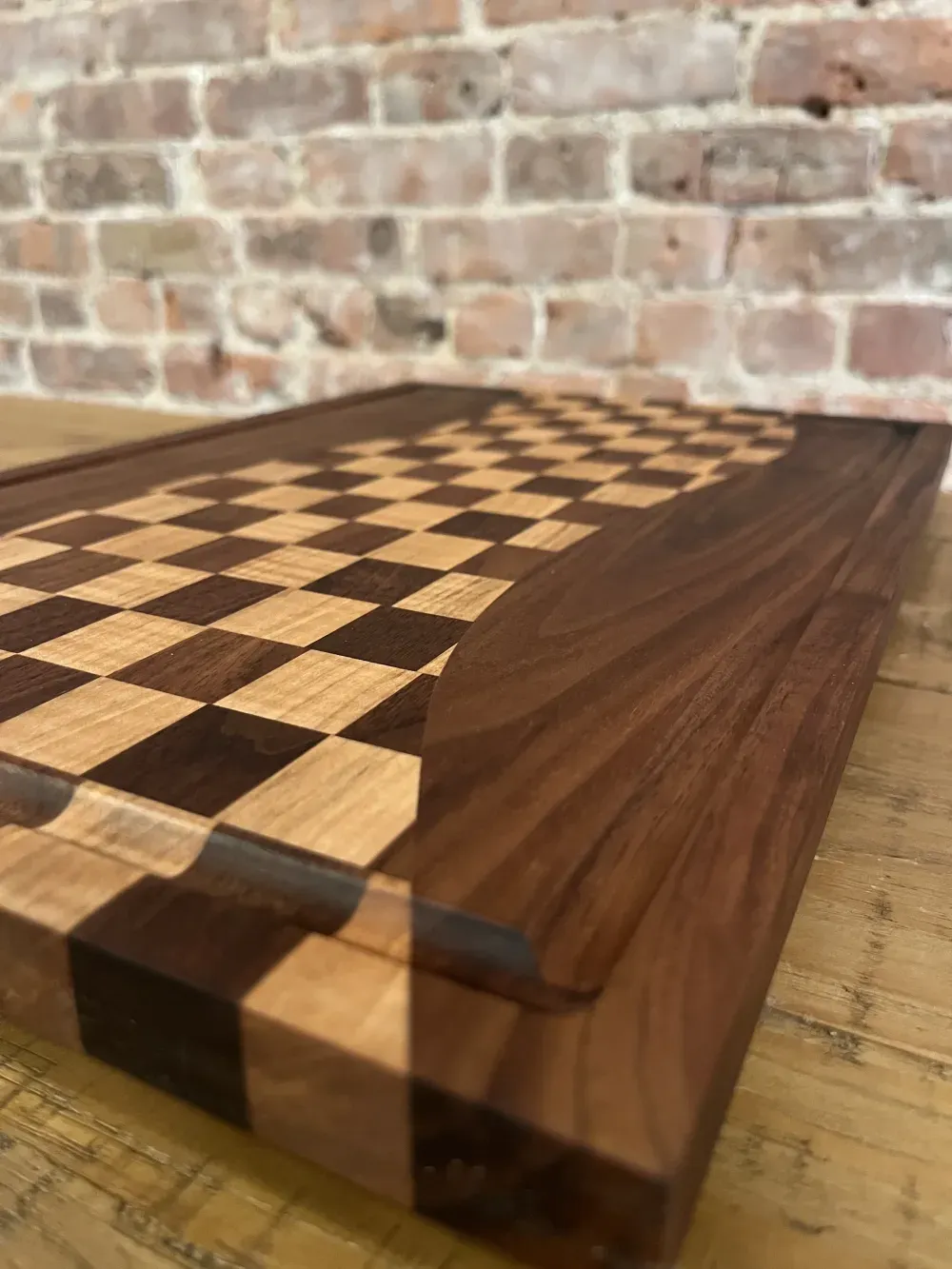
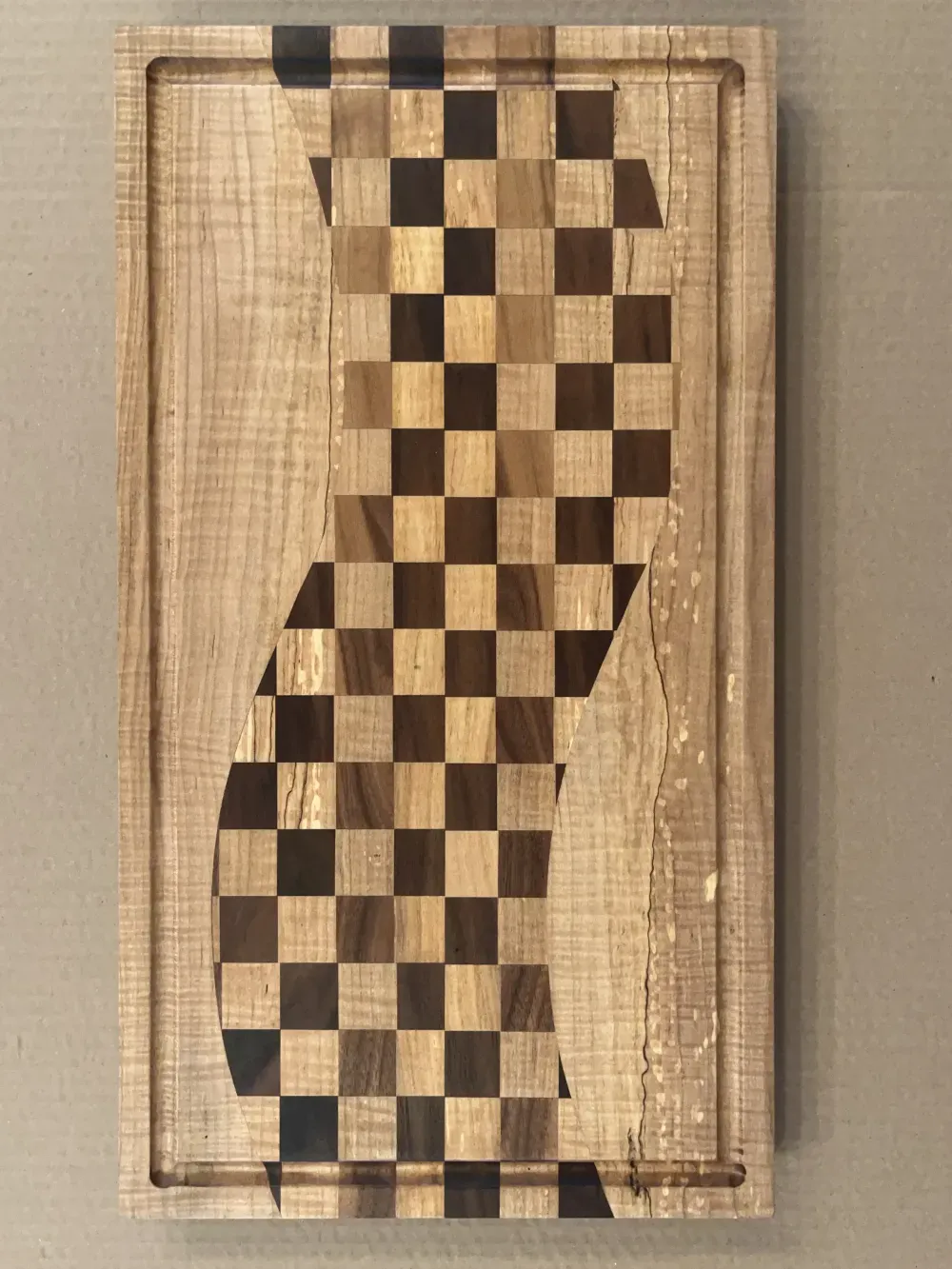
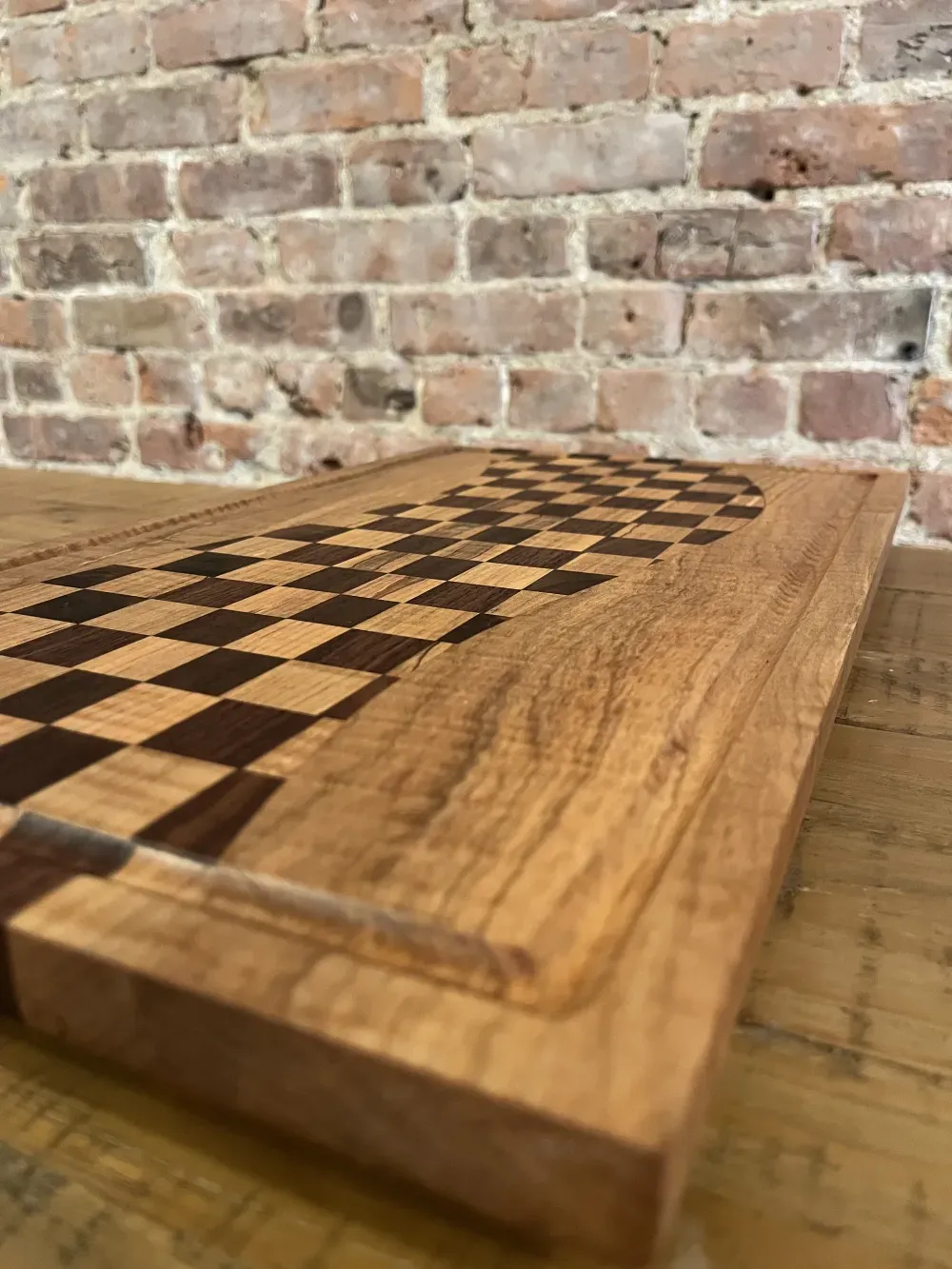
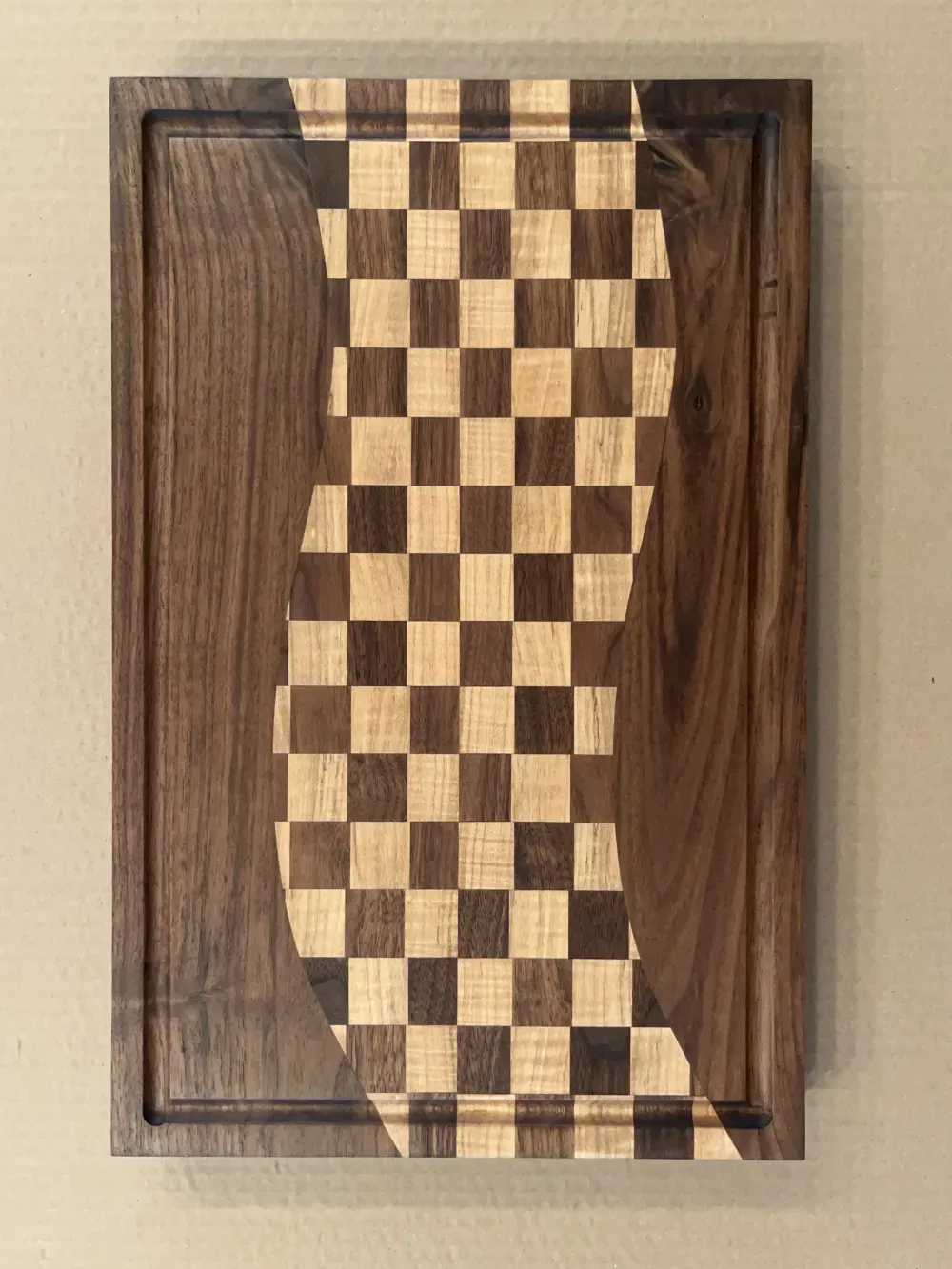
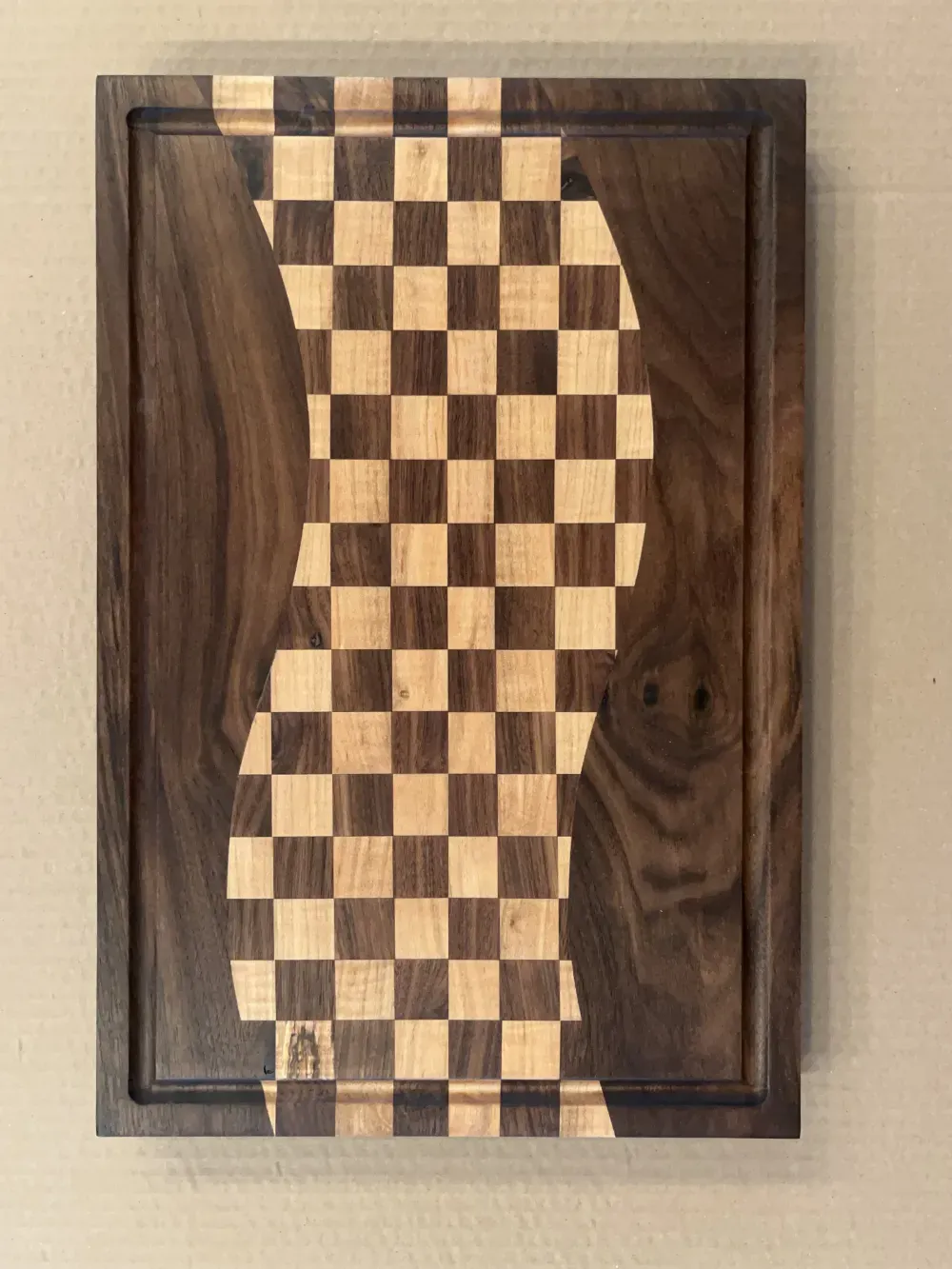
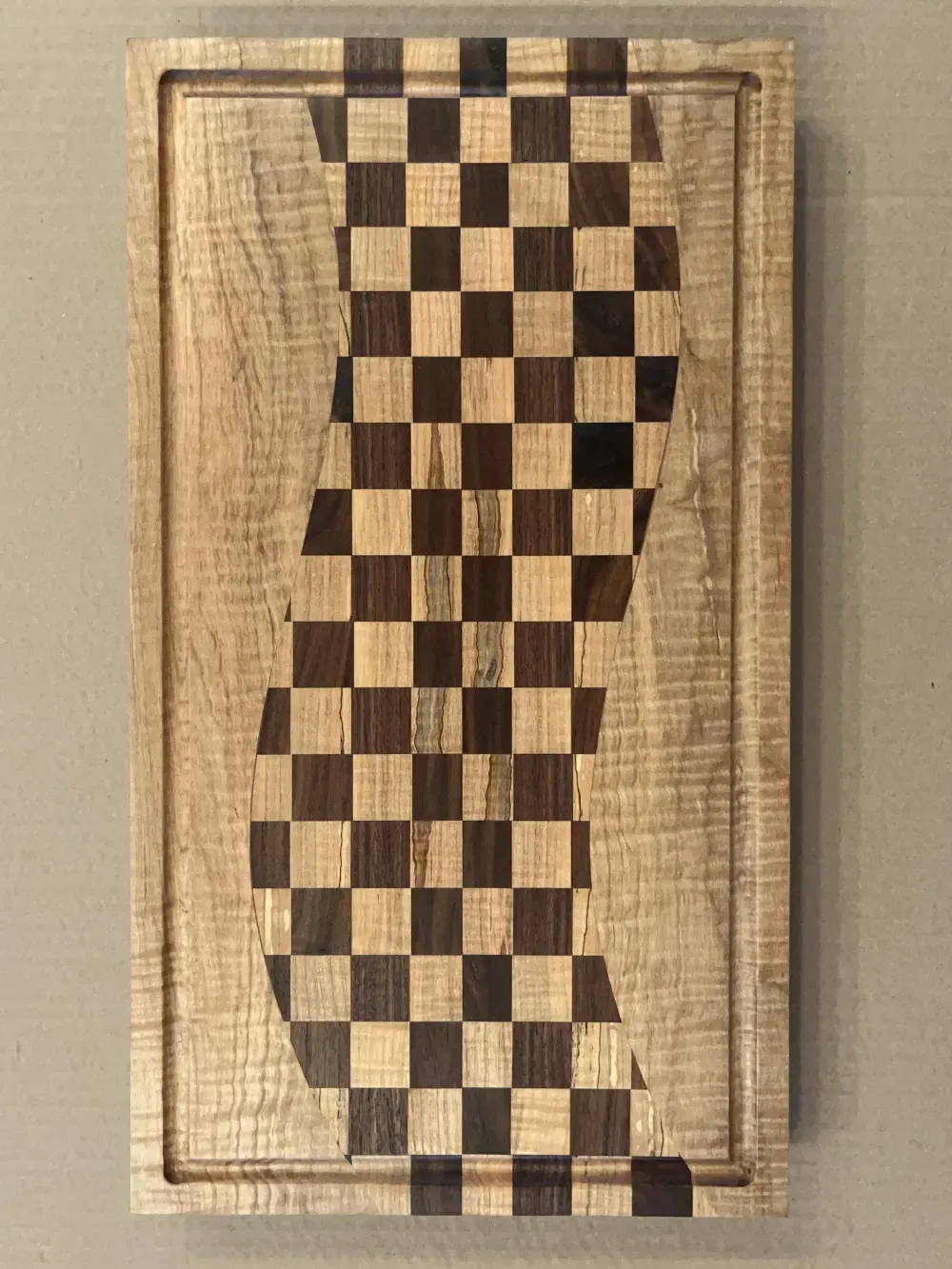
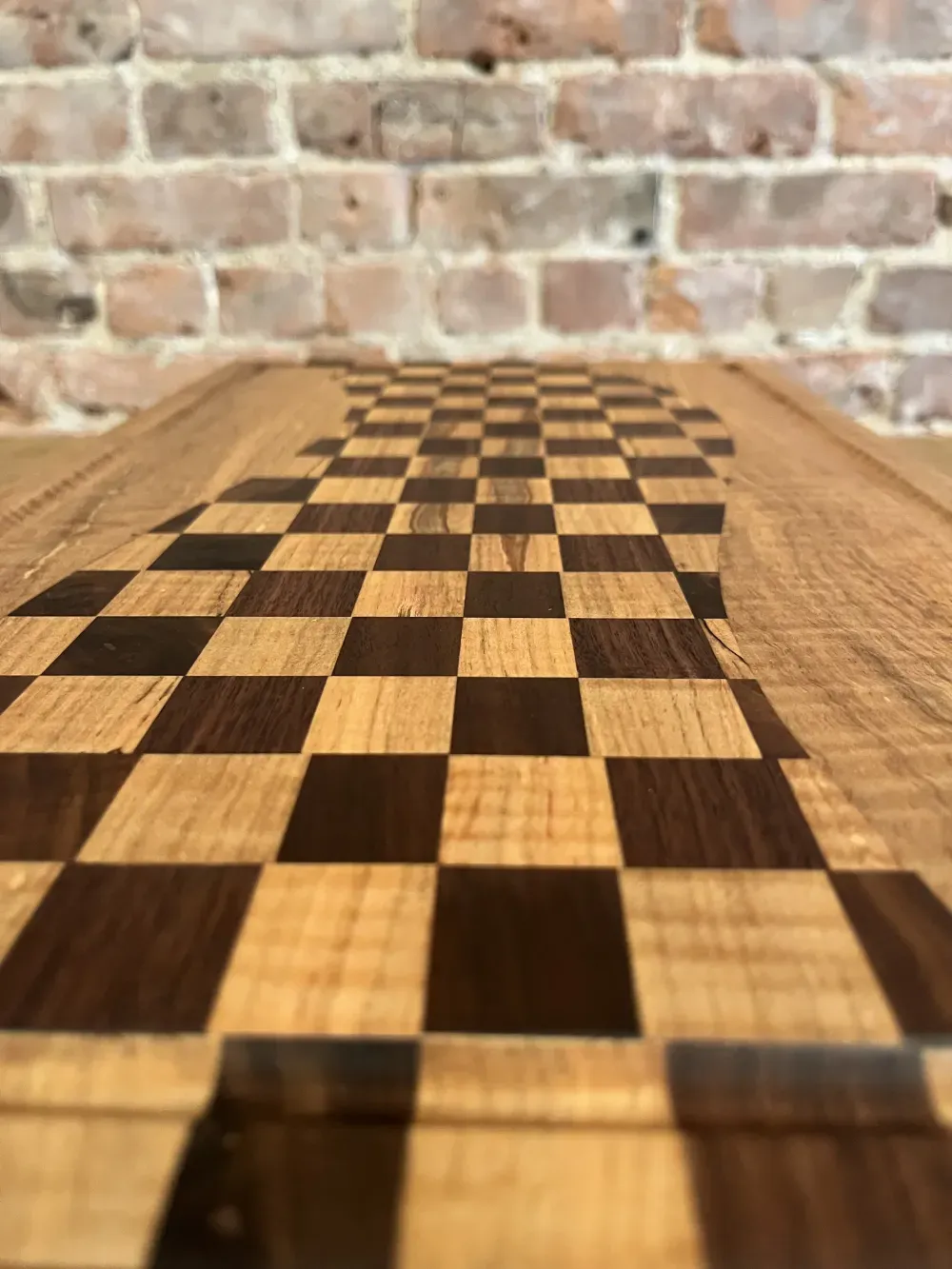
Where the striped river boards read like sediment layers cut by moving water, these checkerboard boards feel more like light breaking across a surface — ice on a pond, sun through a canopy, shadow falling in even beats across open ground. The grid itself becomes the current, each square a pixel of contrast that shifts and pulses as it winds down the board.
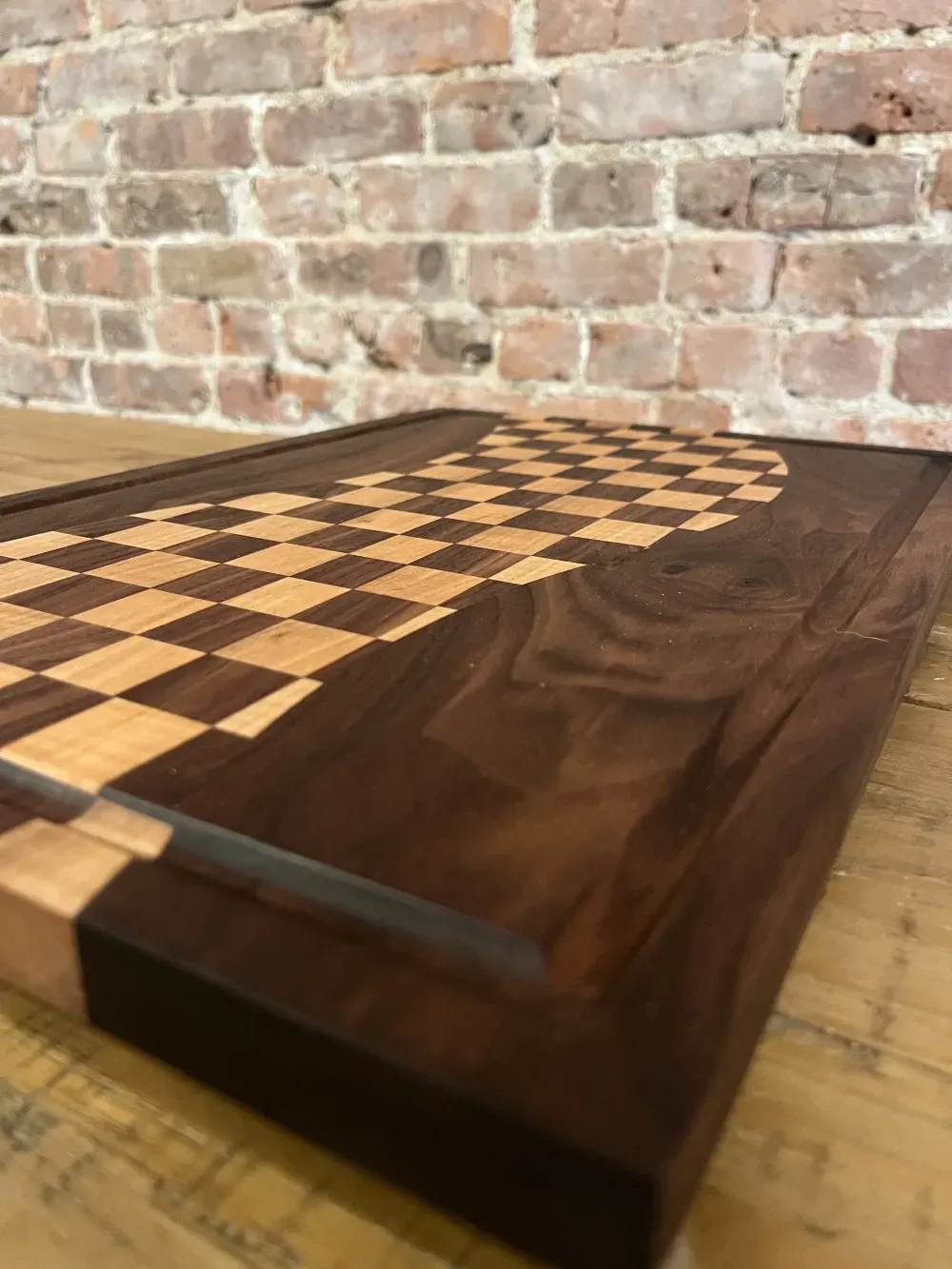
These handcrafted cutting boards reimagine the traditional checkerboard motif as a flowing “river” of contrast that bows and tapers along a winding path, breaking free of the rigid grid we expect from this pattern and letting it move the way water or wind might carve through a fixed structure — giving the illusion of movement frozen in wood.. The result feels architectural and organic at once: ordered up close, fluid from a distance.
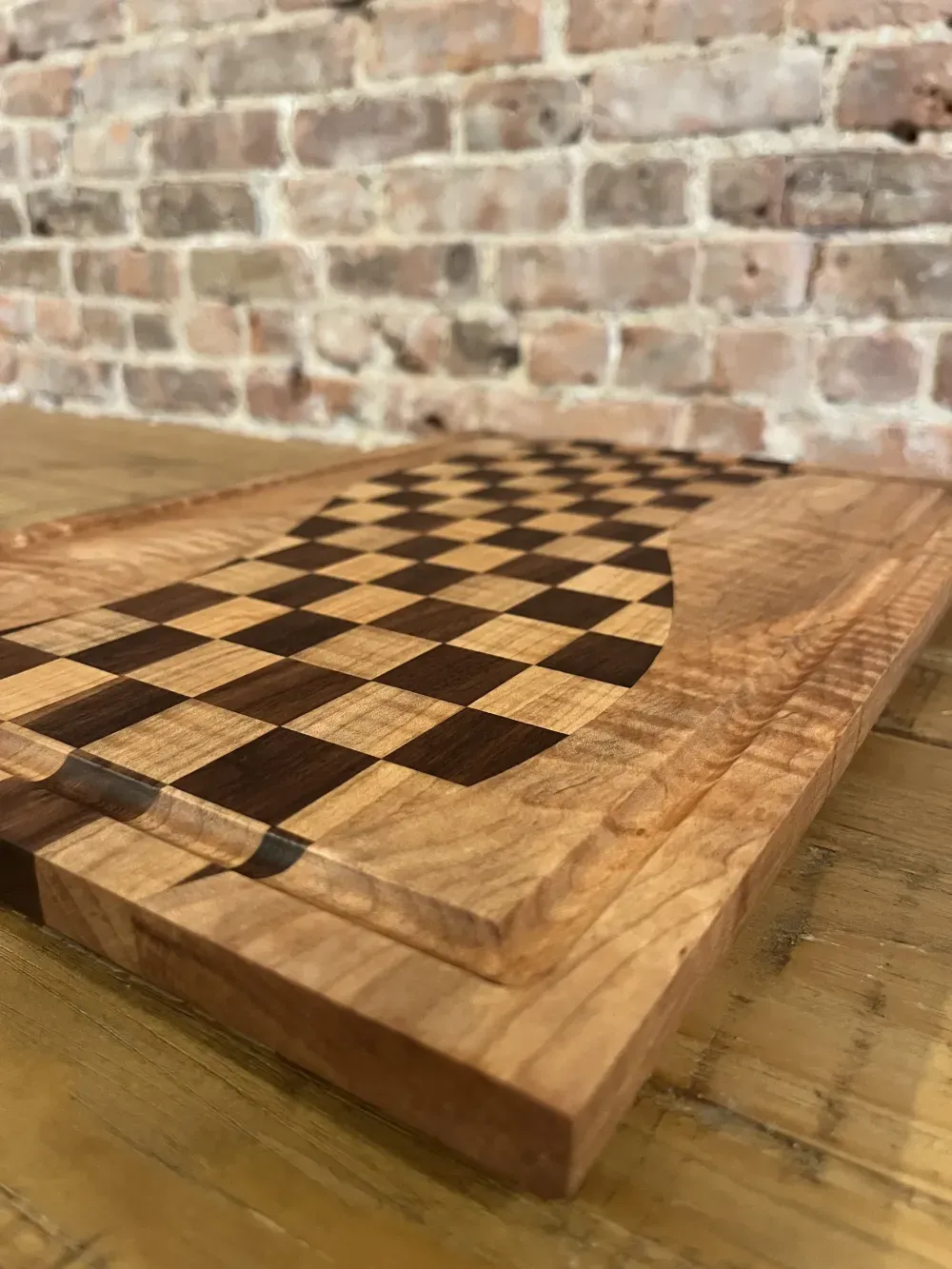
Every board is one of a kind. The curl and figure in the maple, the depth and movement in the walnut grain — no two boards catch the light quite the same way.
Two Complementary Colorways:
- Curly Maple Dominant — A light, luminous Curly Maple field with dramatic figure and chatoyance, through which a Walnut-and-Maple checkerboard river cuts a striking dark path.
- Walnut Dominant — A deep, chocolate-toned Walnut field surrounds a lighter checkerboard river of Maple and Walnut squares, offering a moodier, high-contrast look.






Classic Stripe & Woven Accent Boards
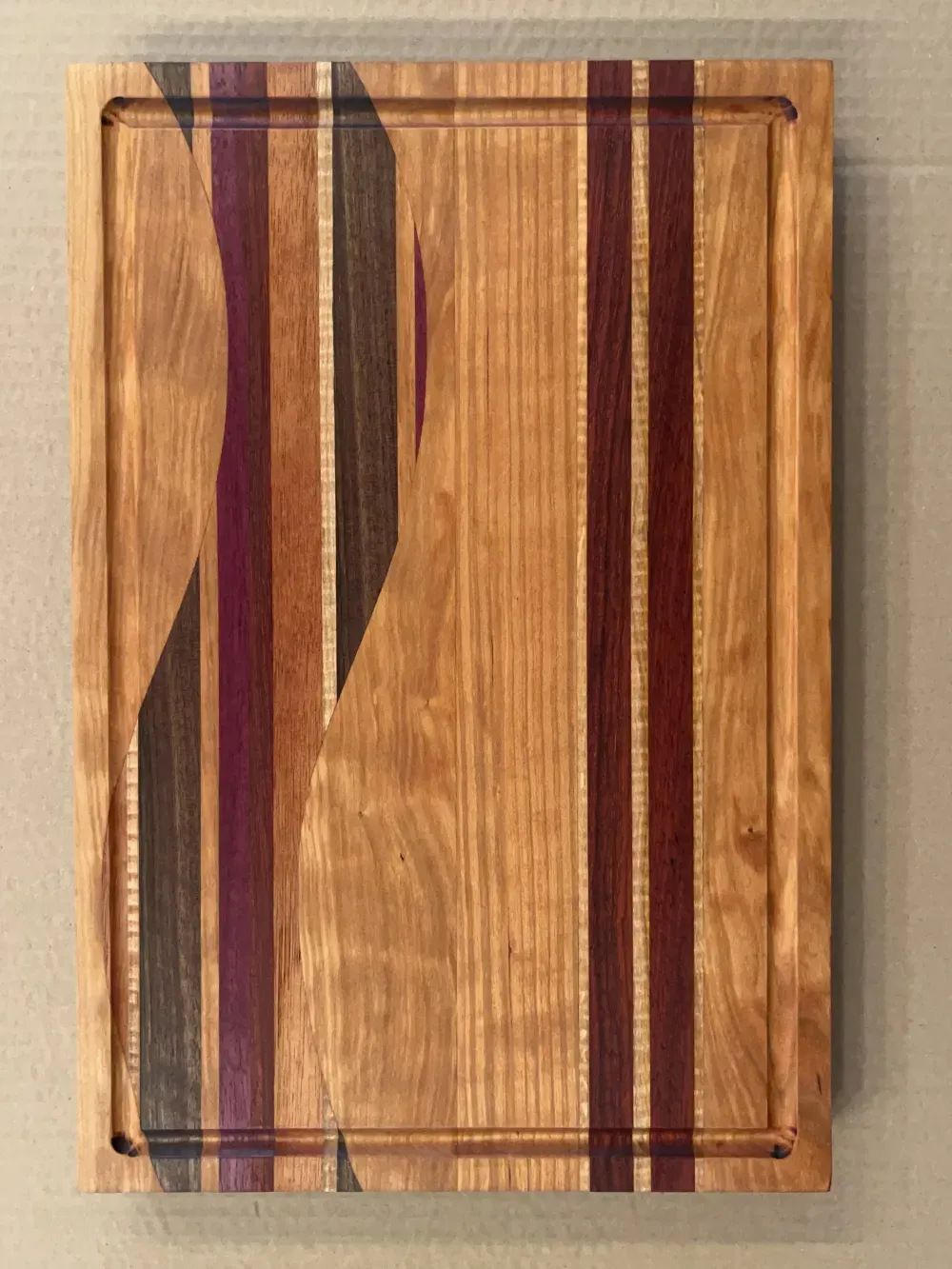
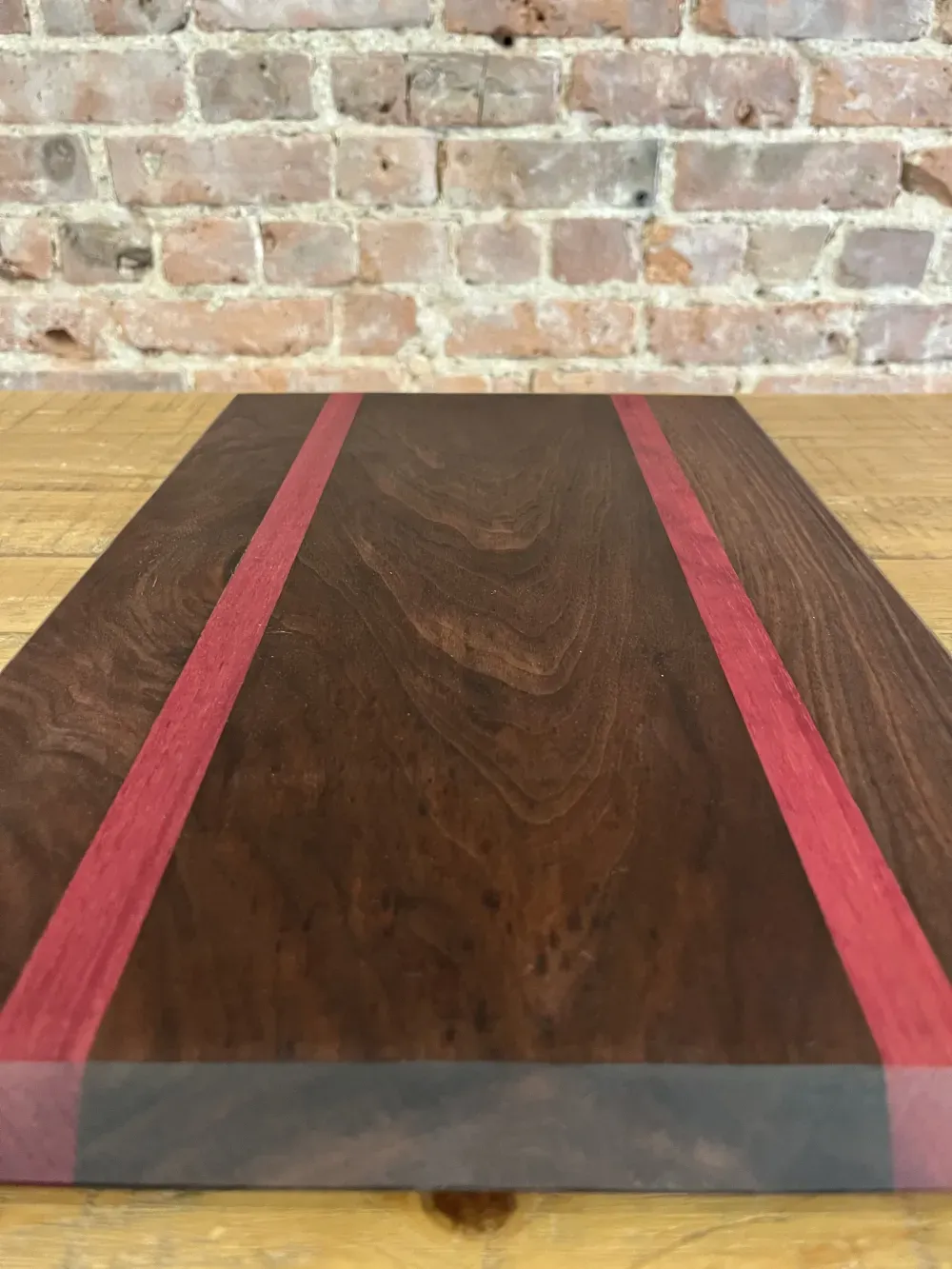
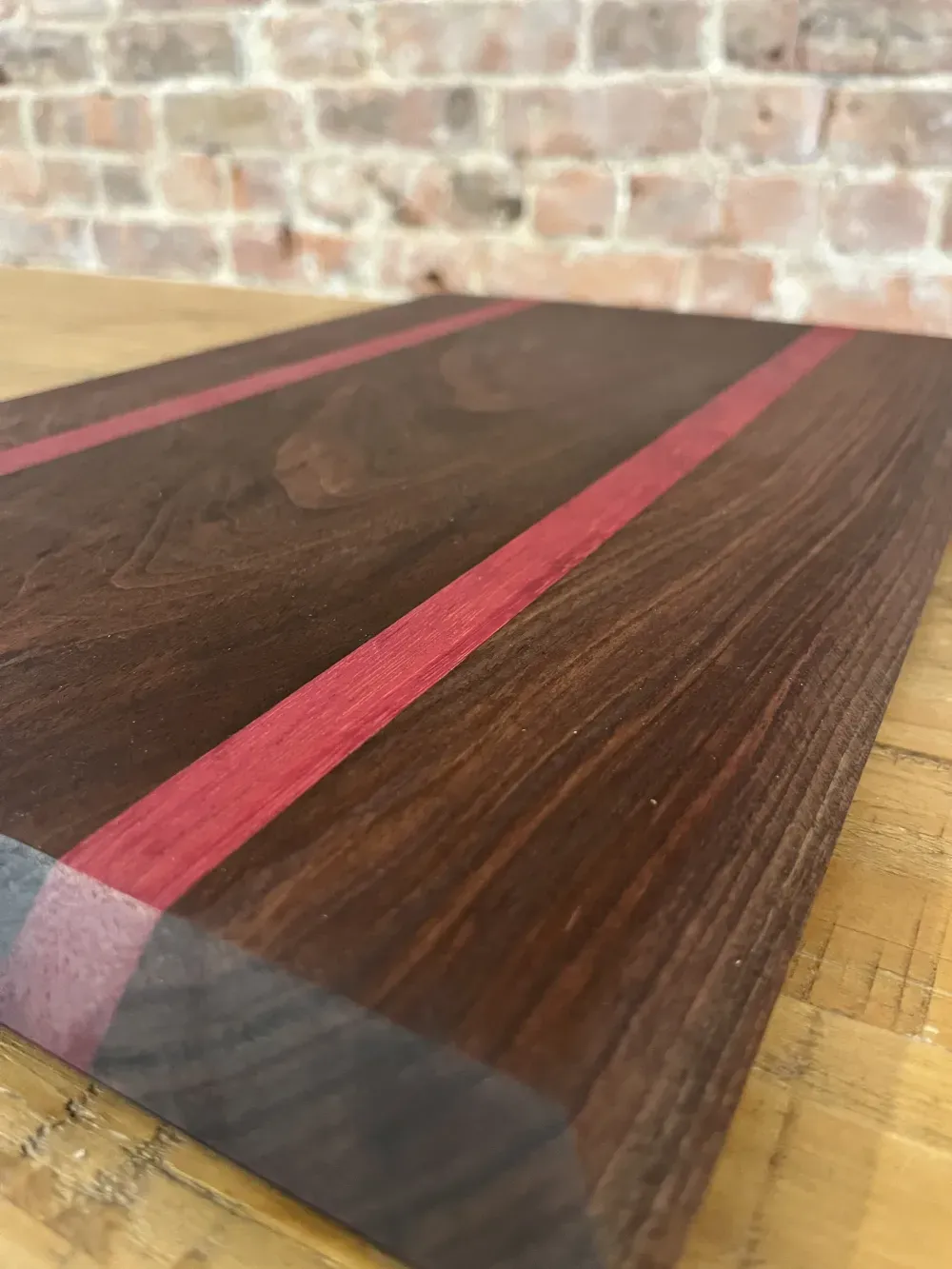
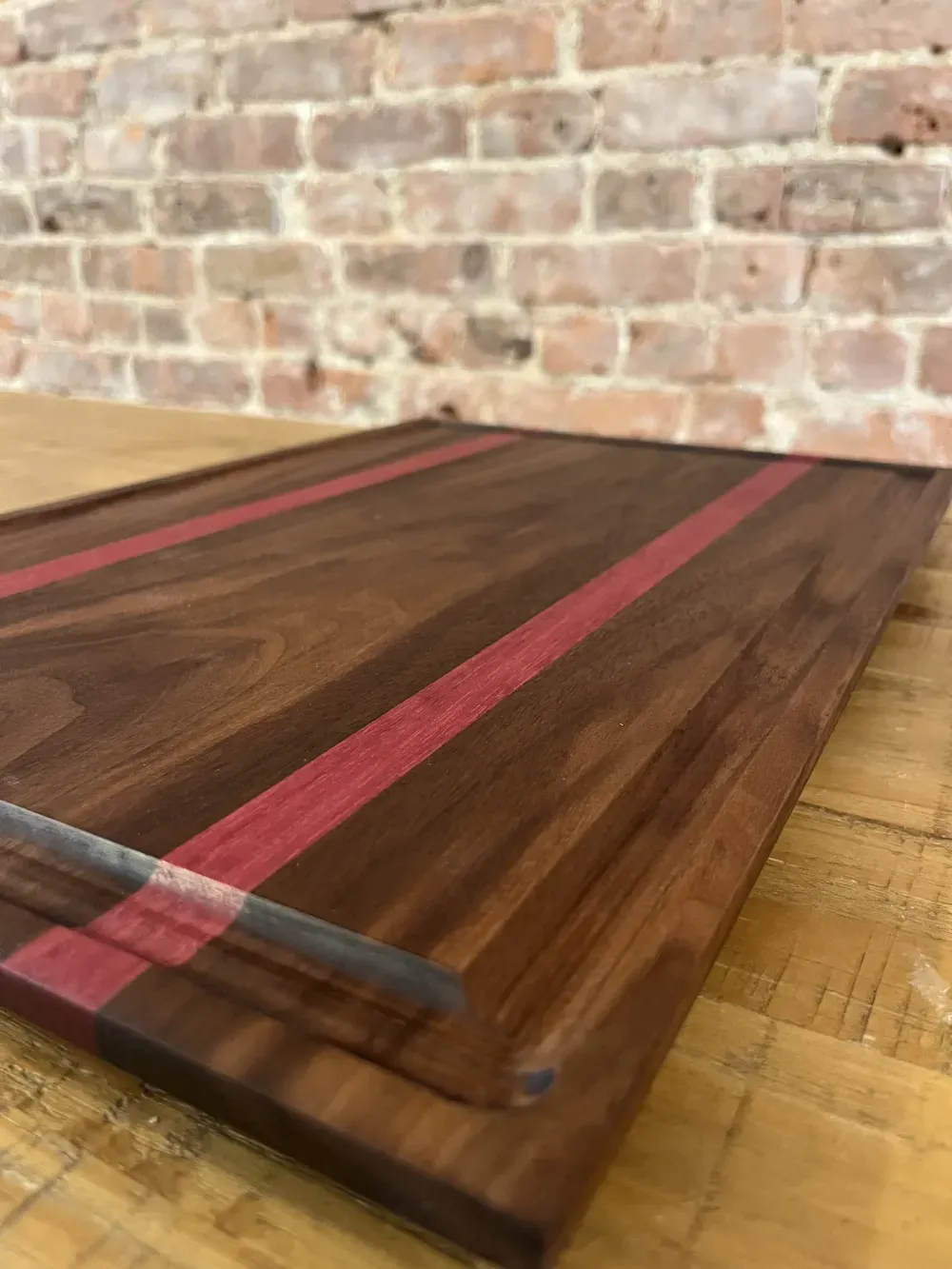
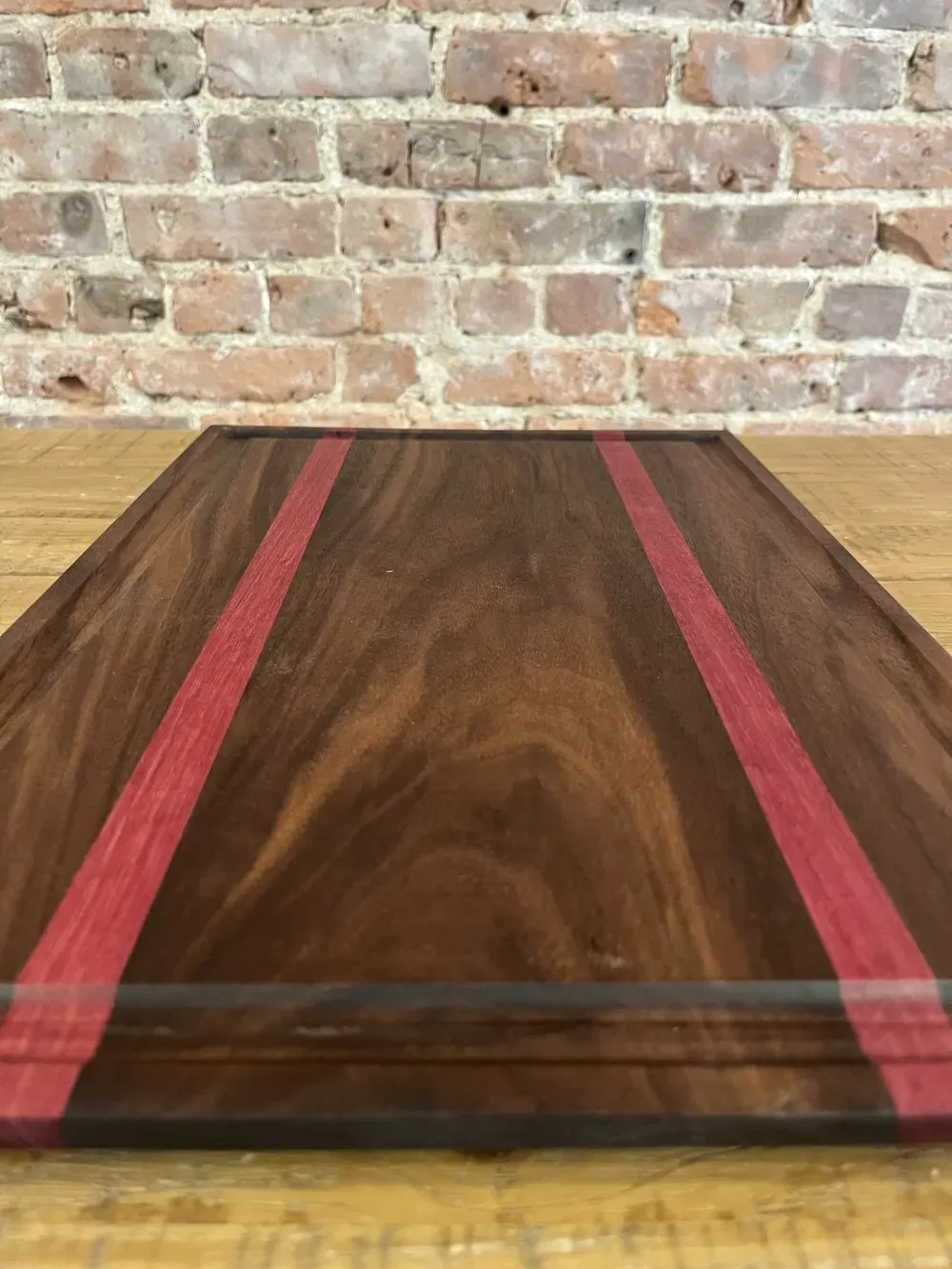
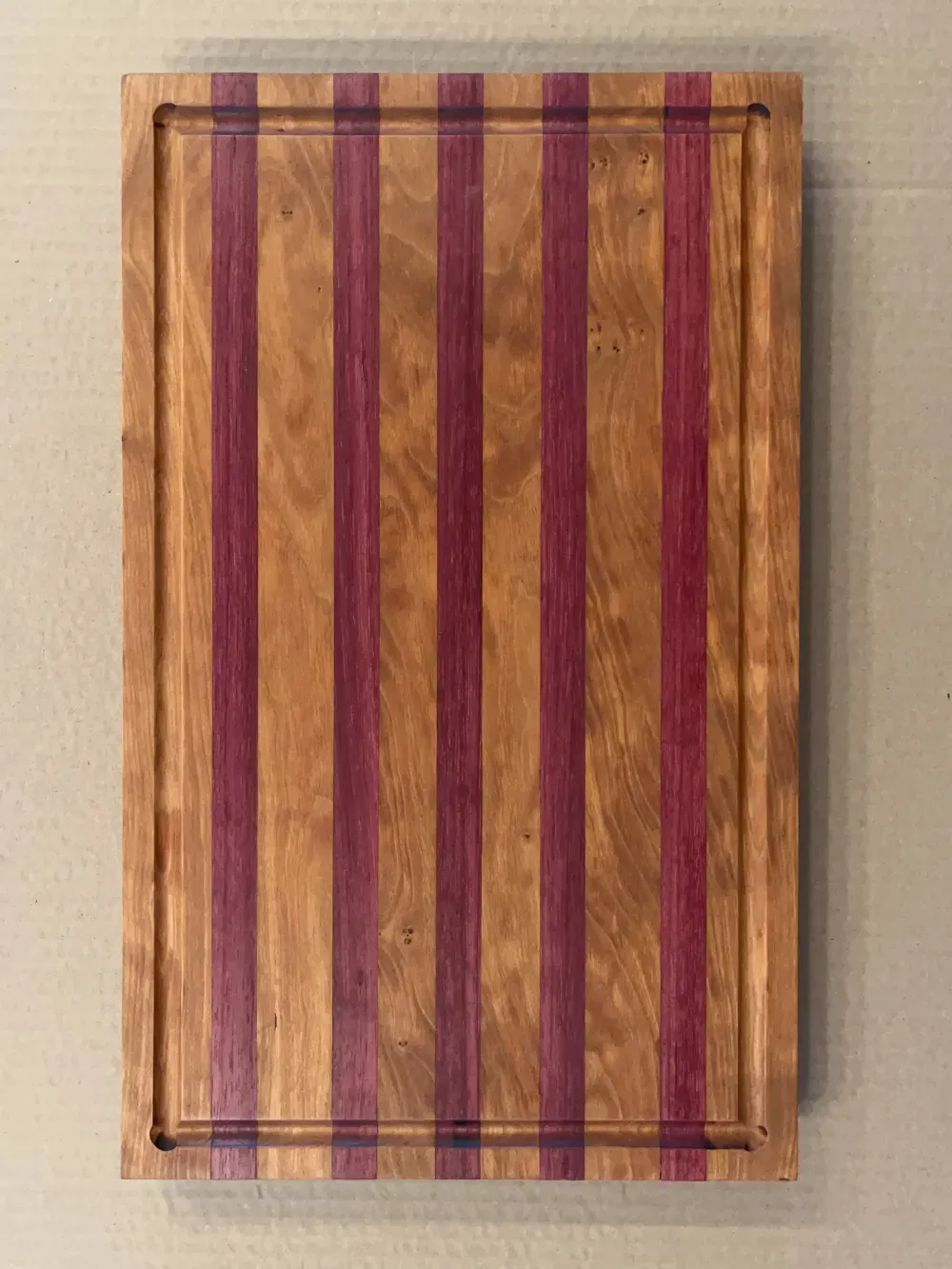
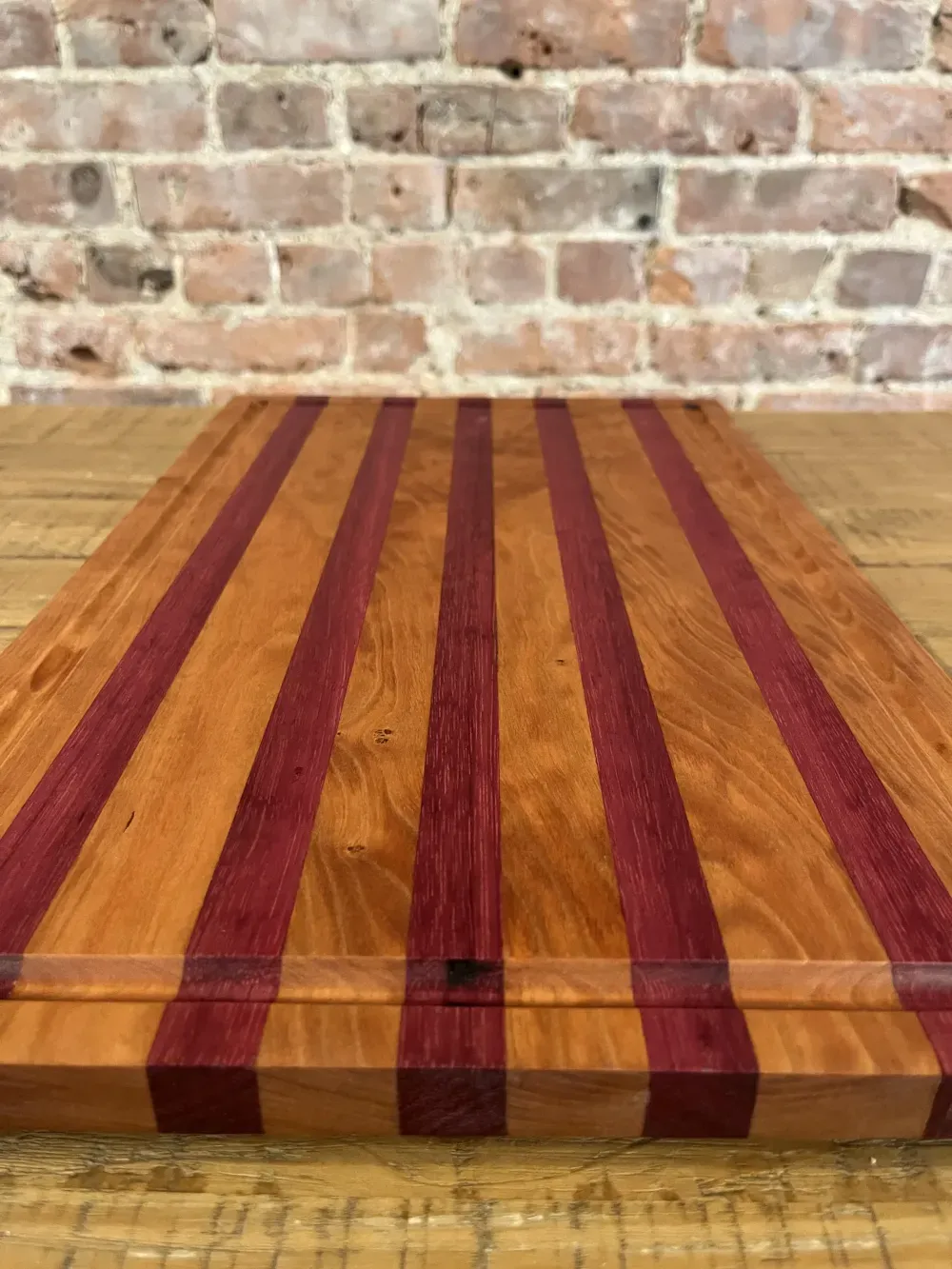
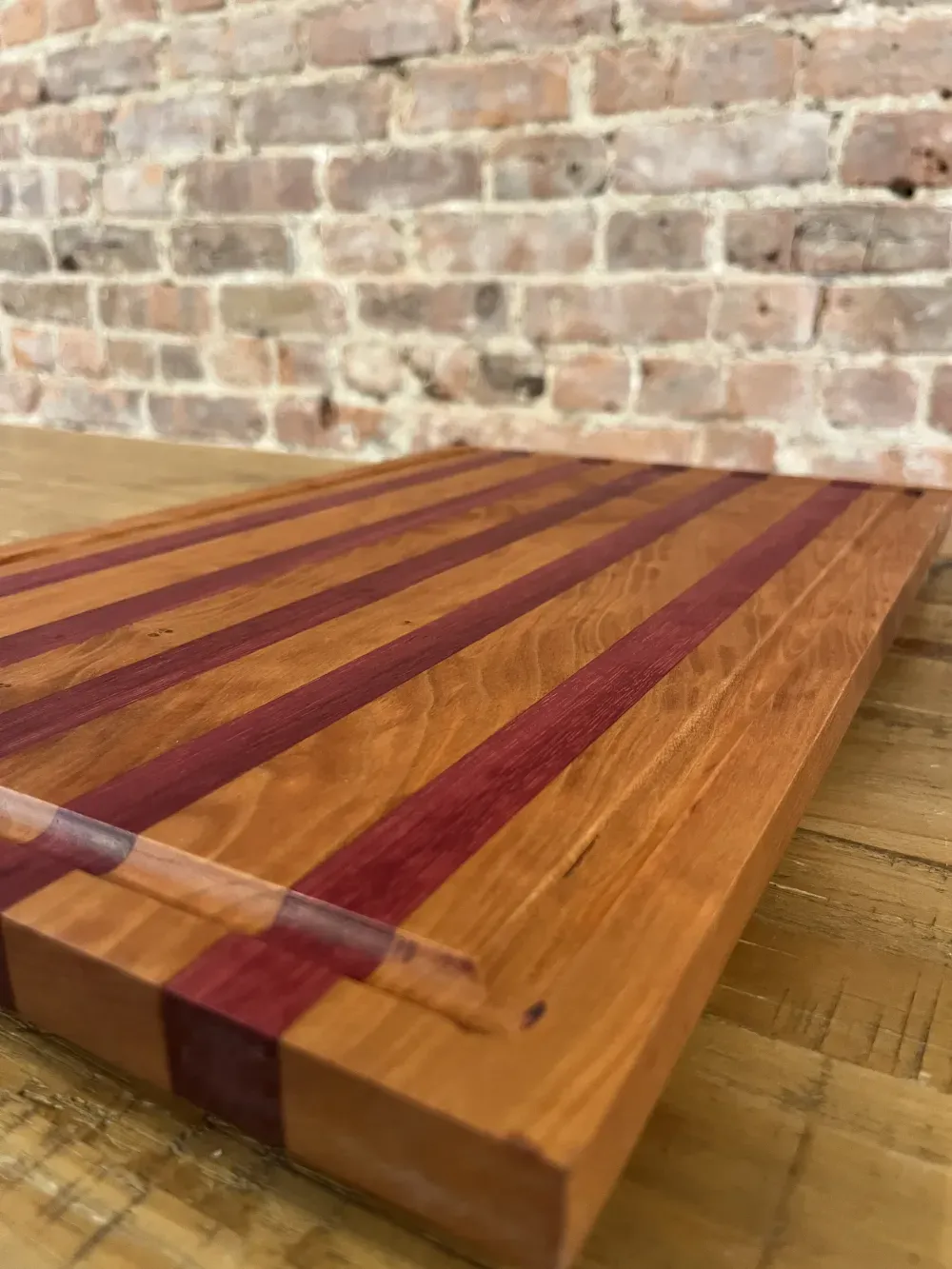
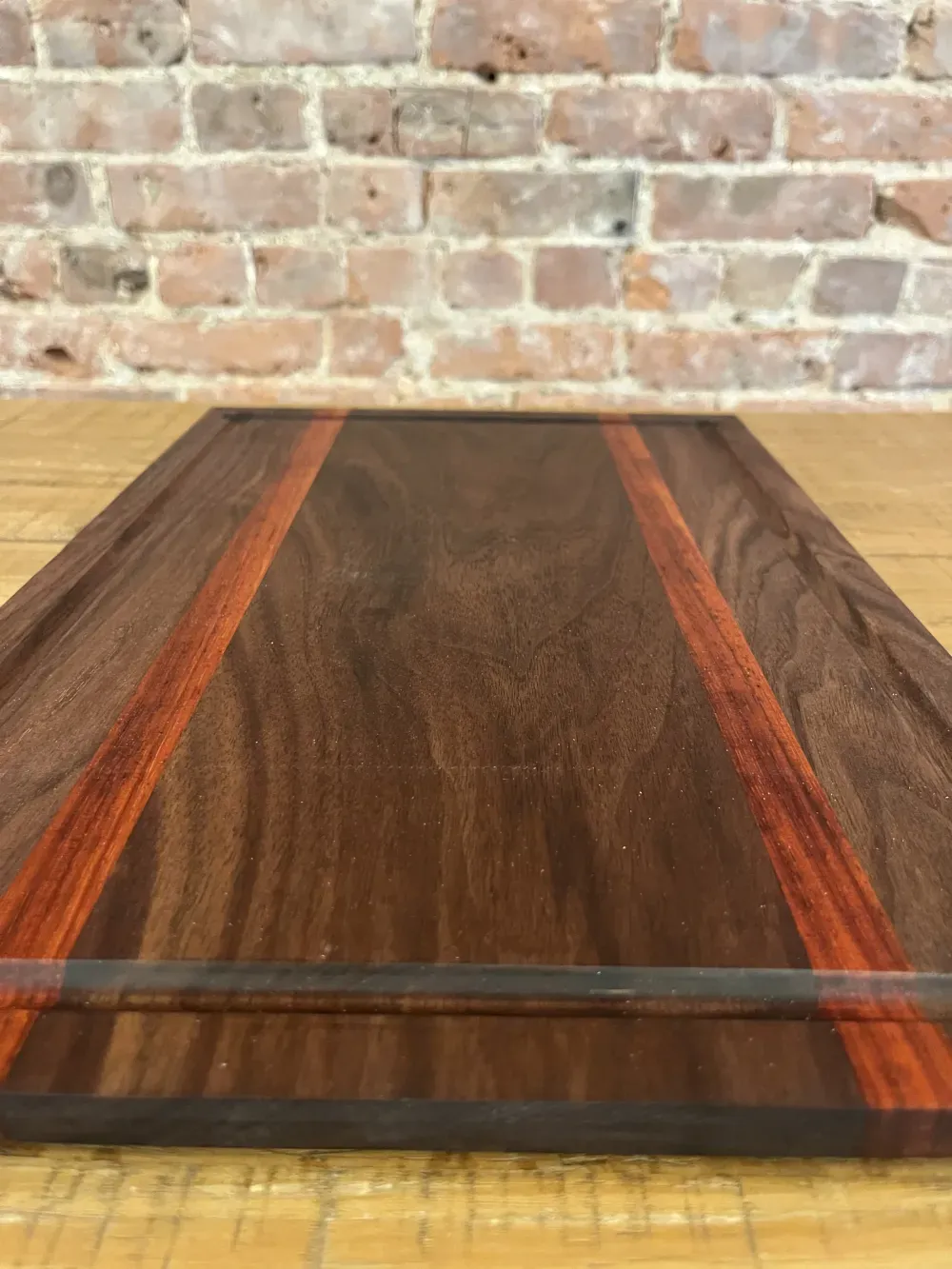
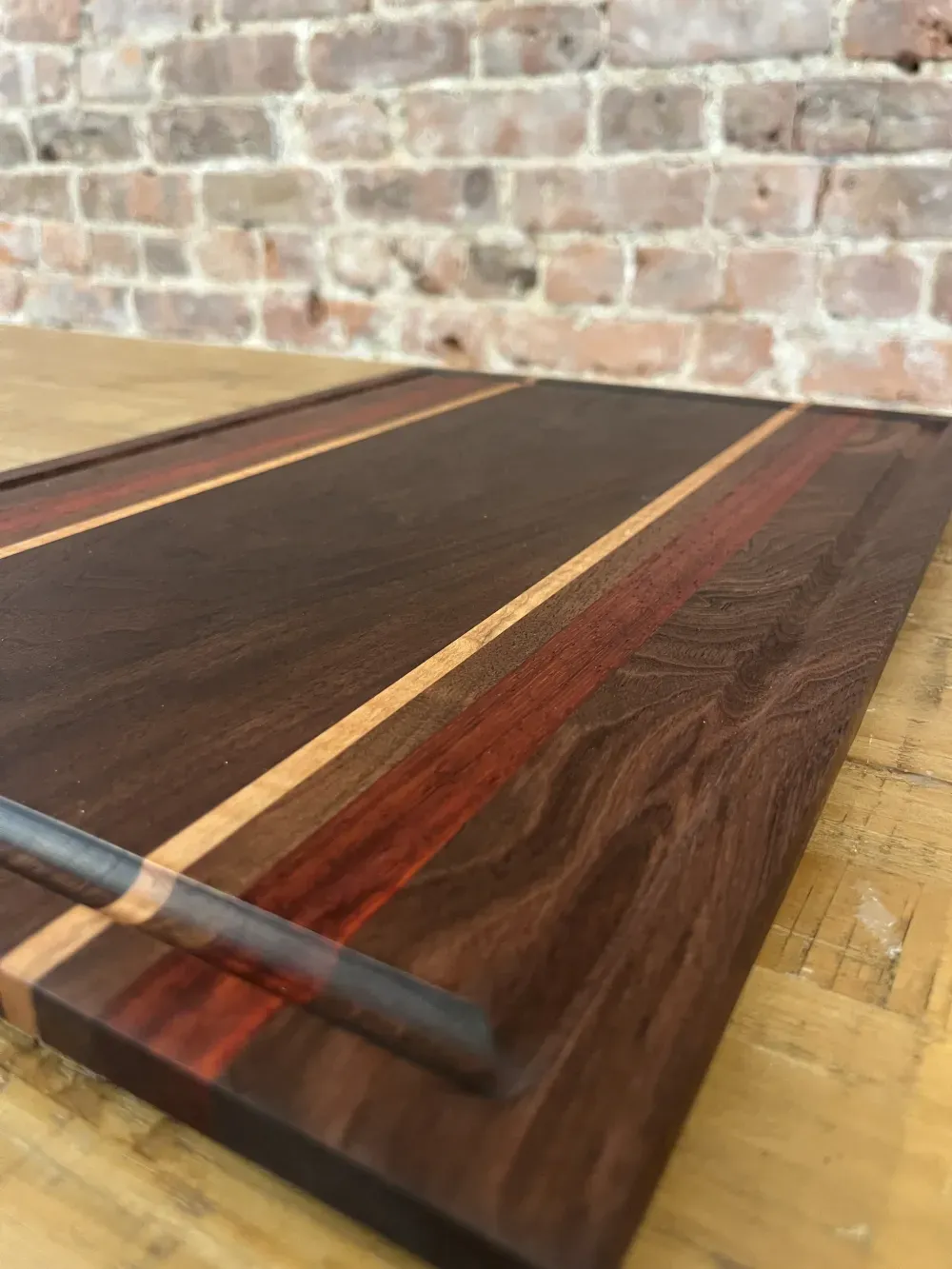
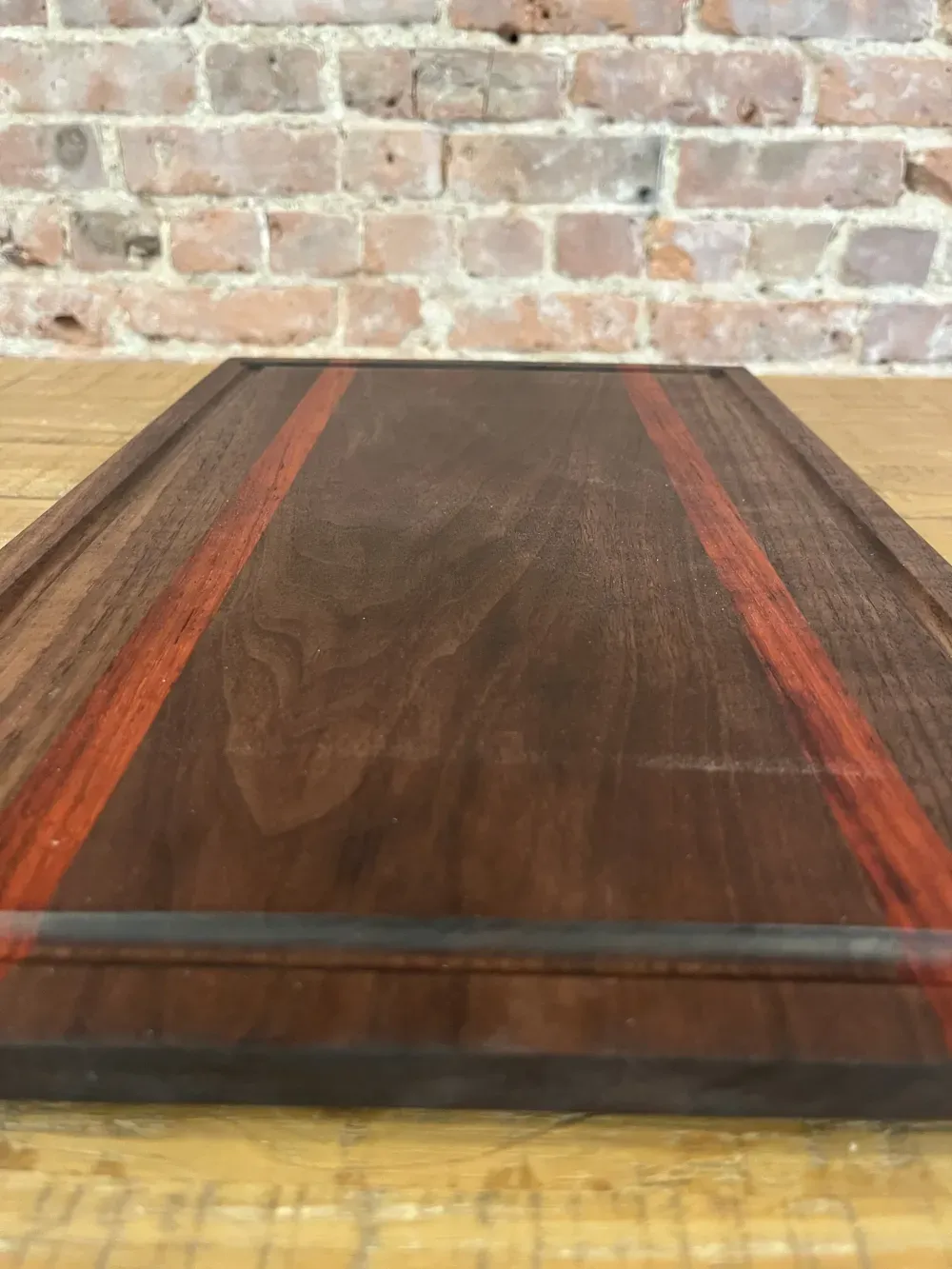
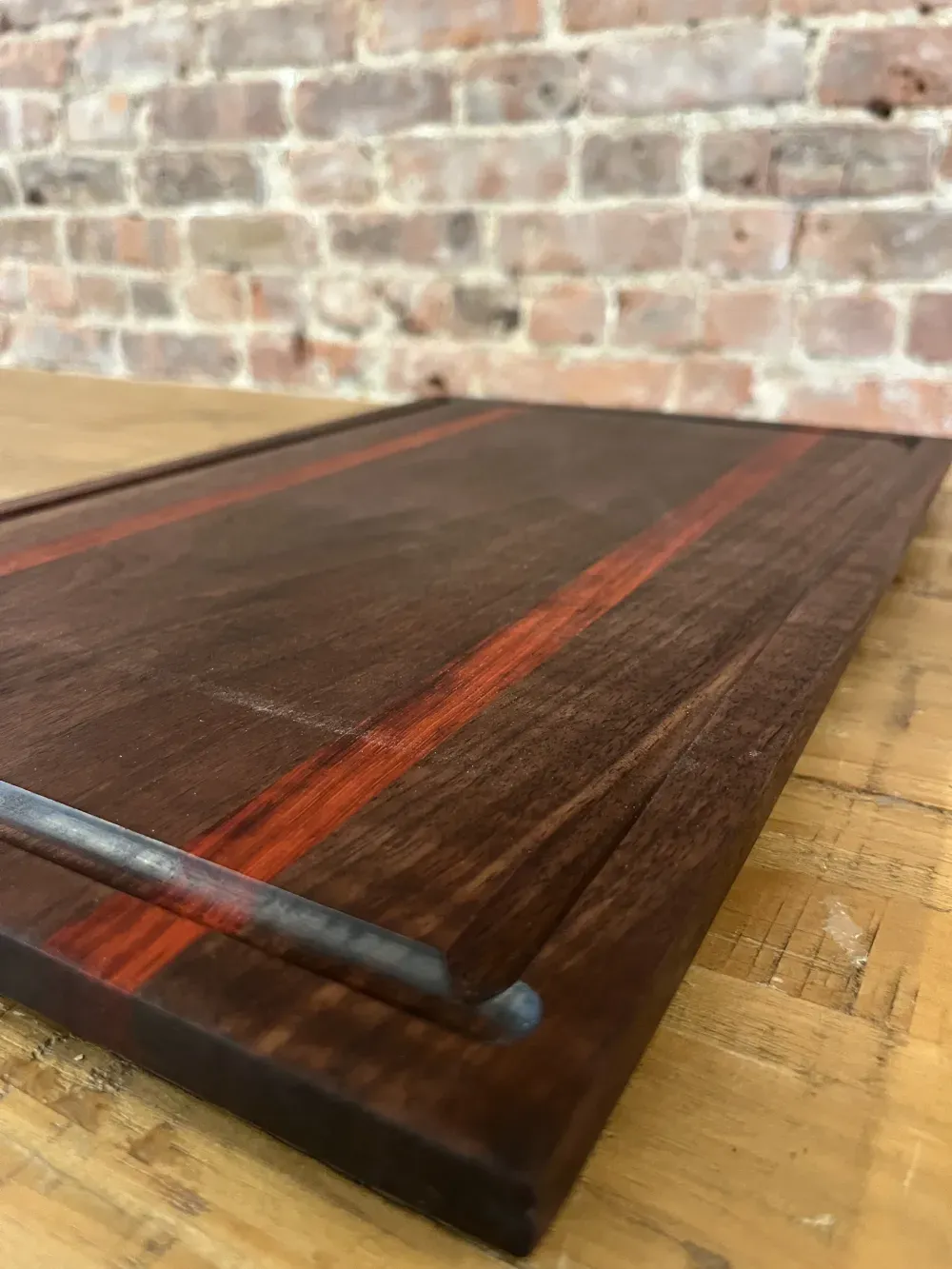
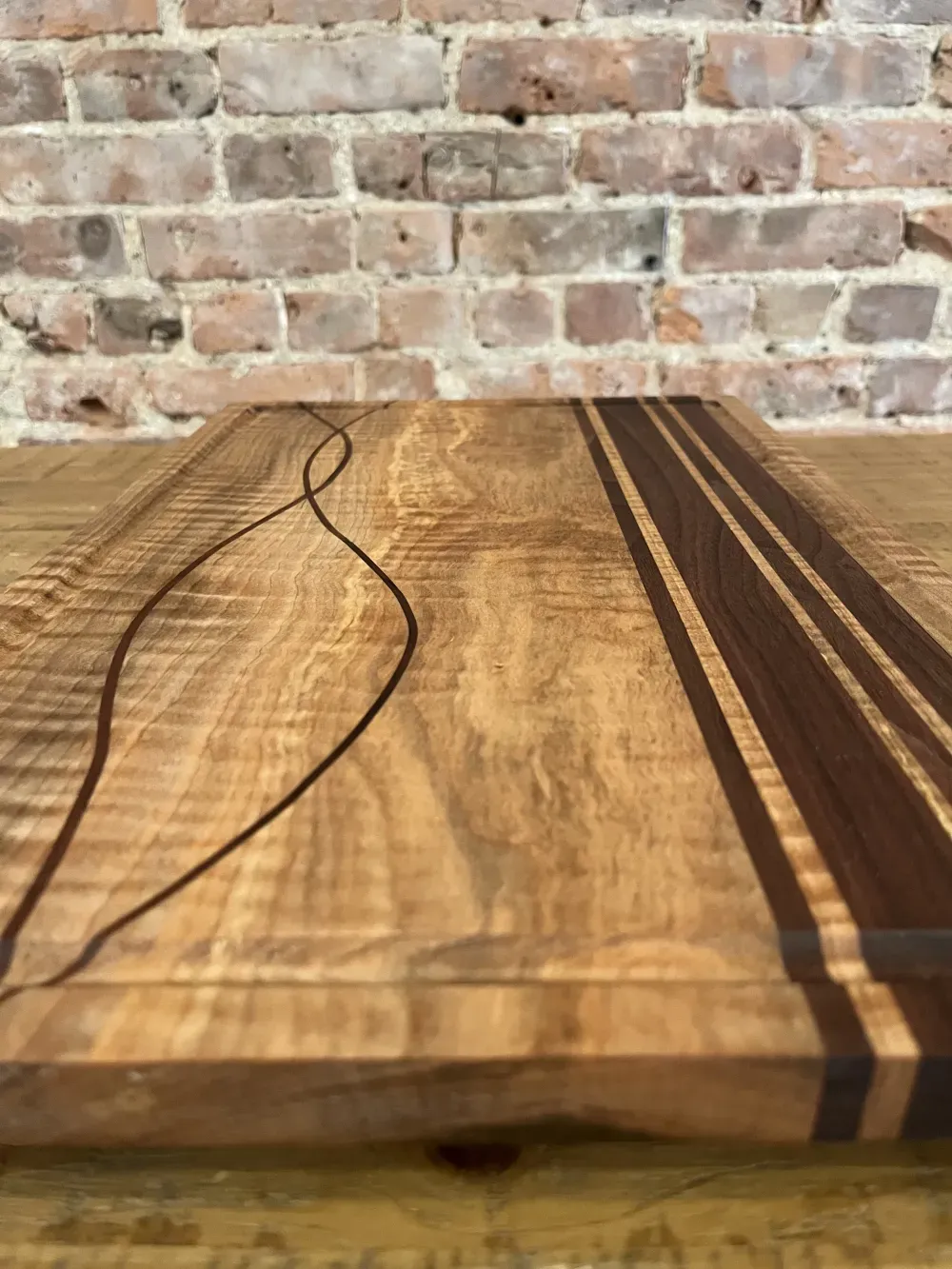
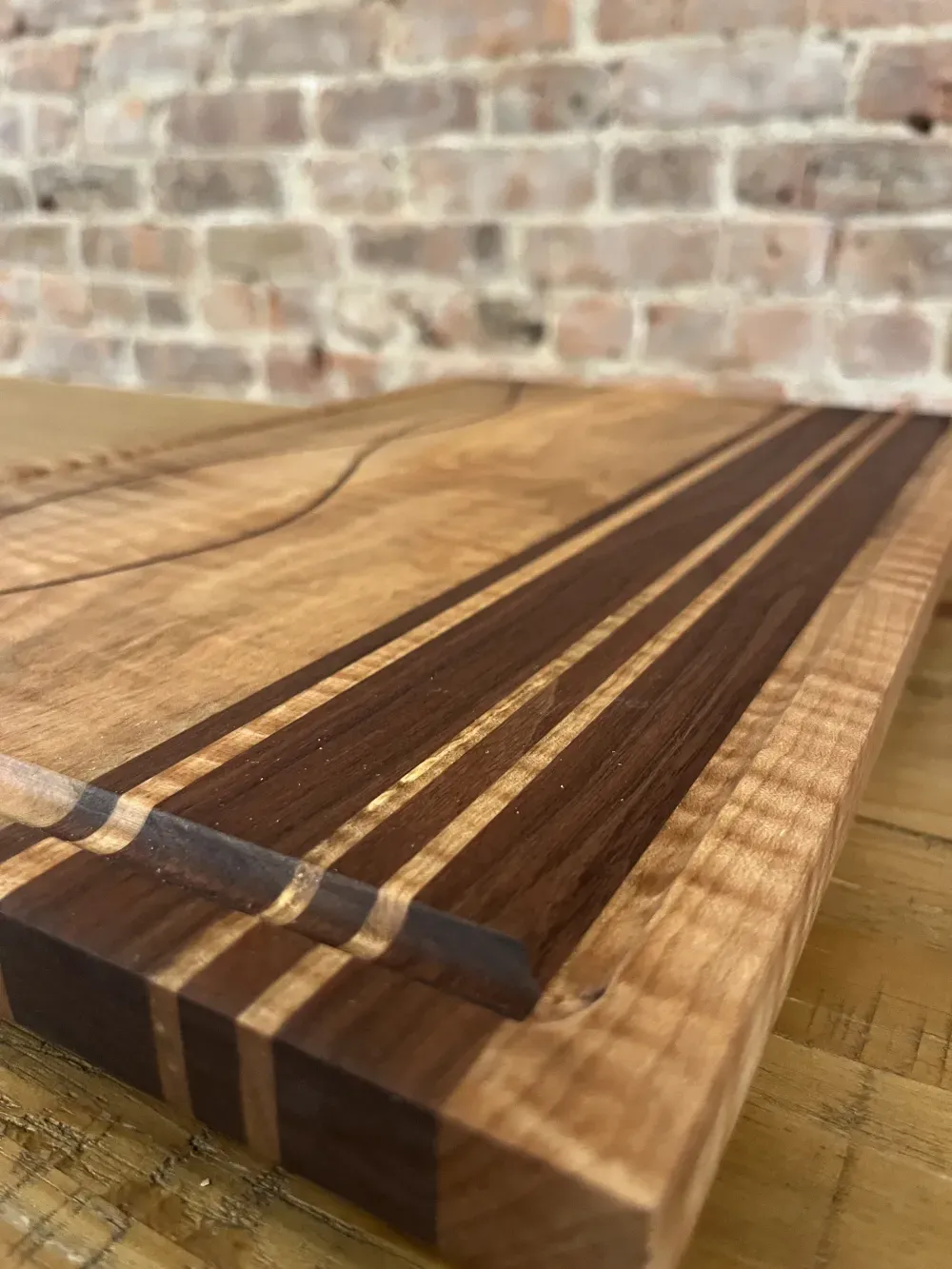
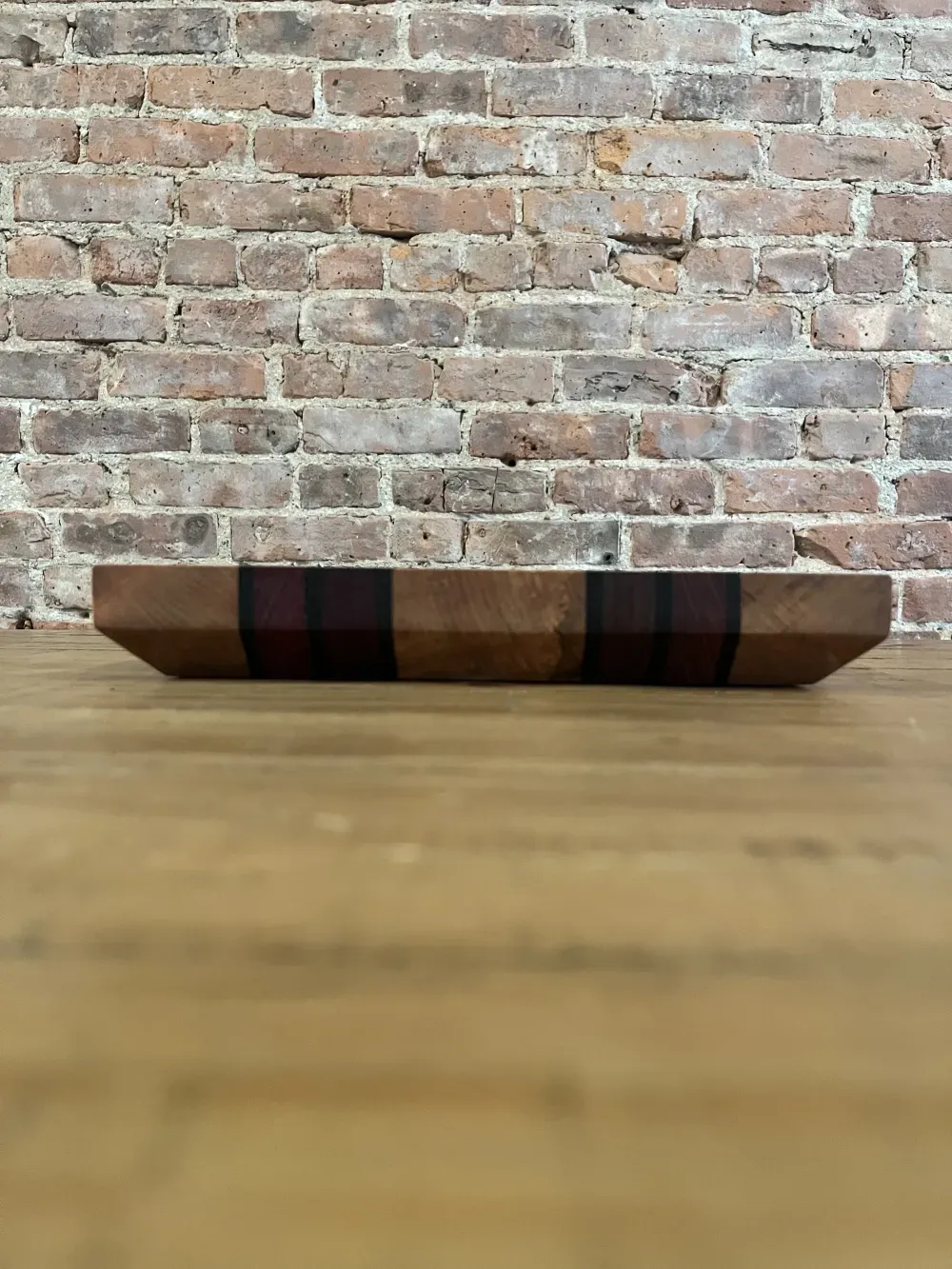
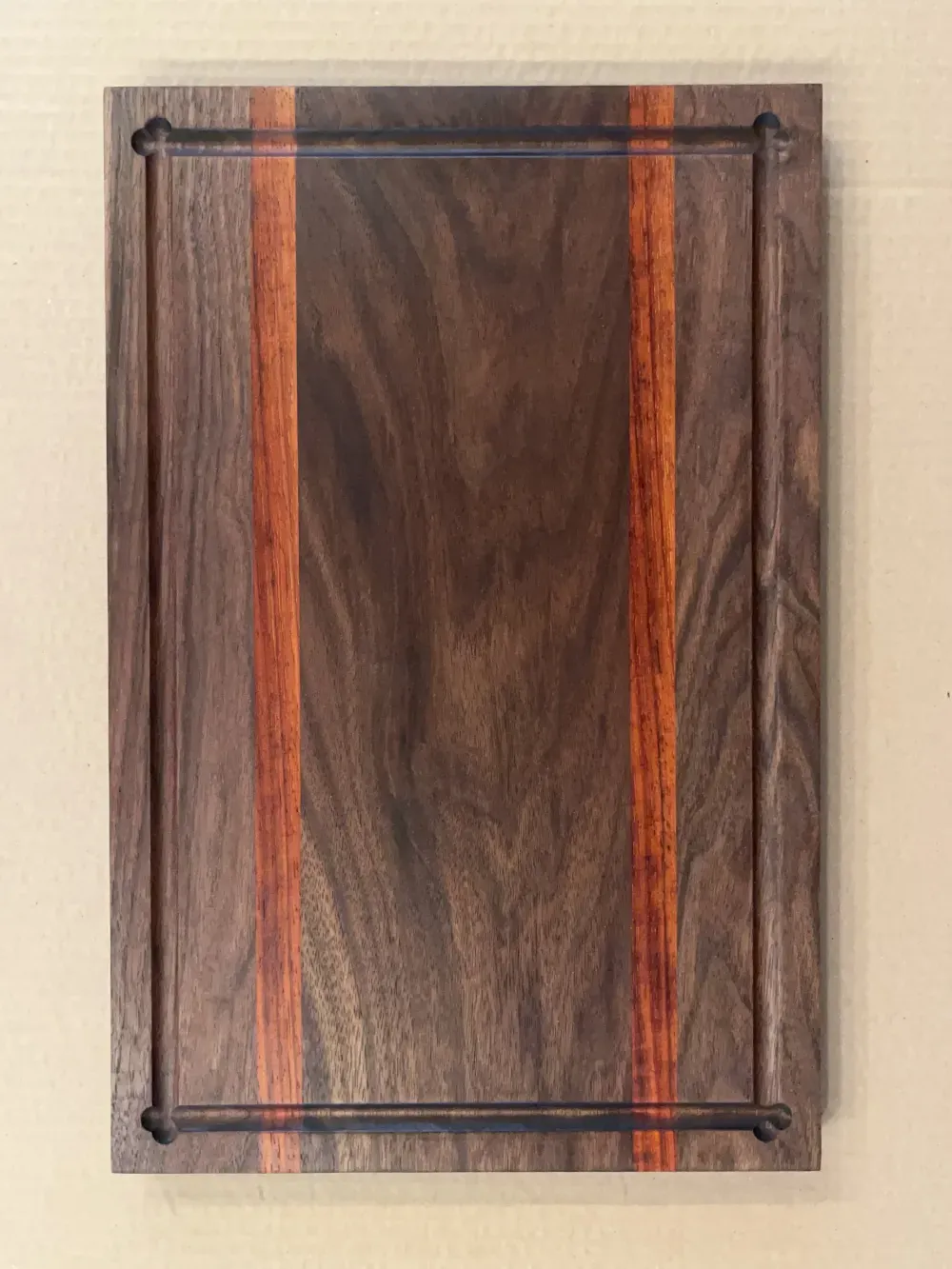
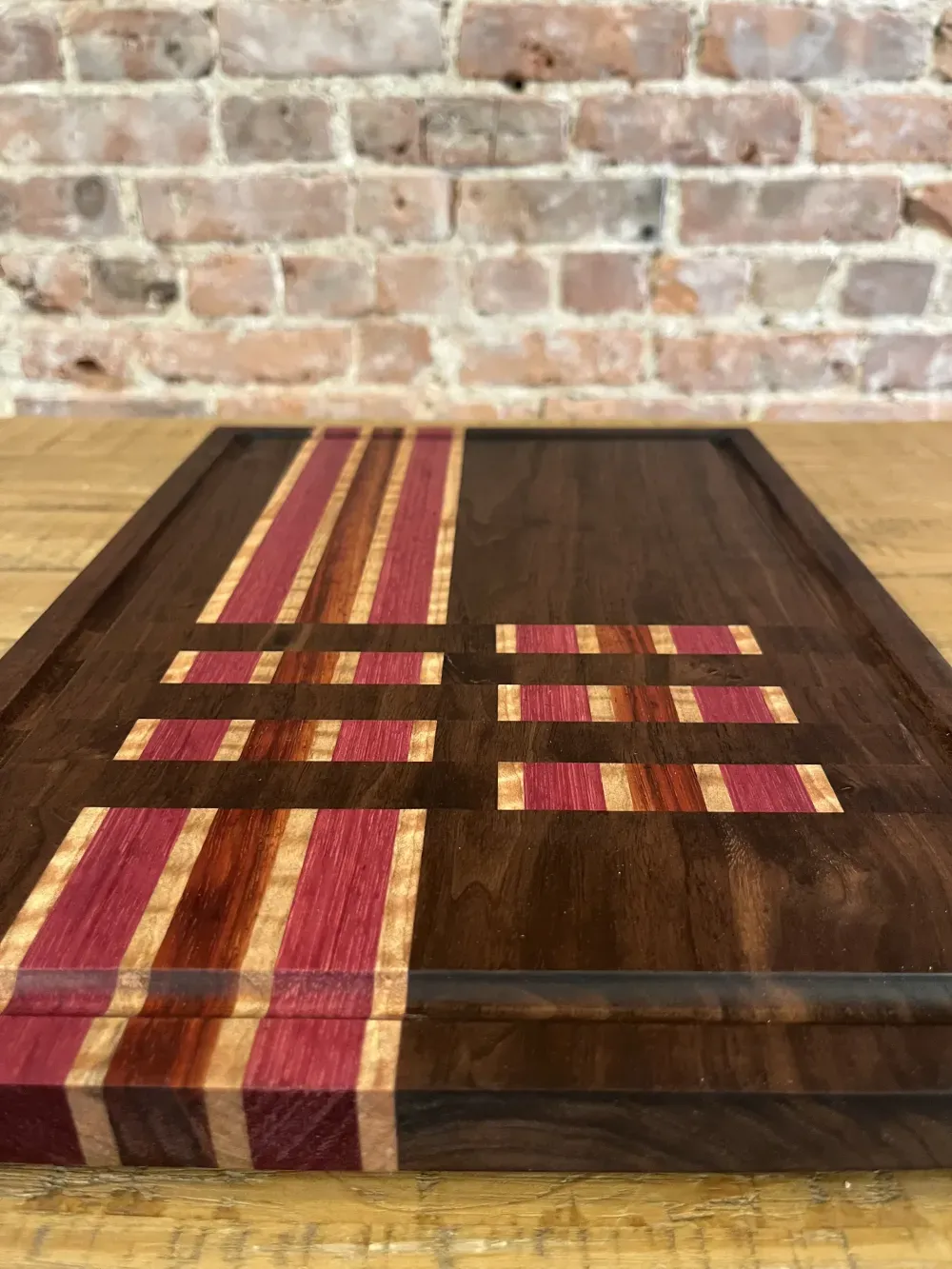
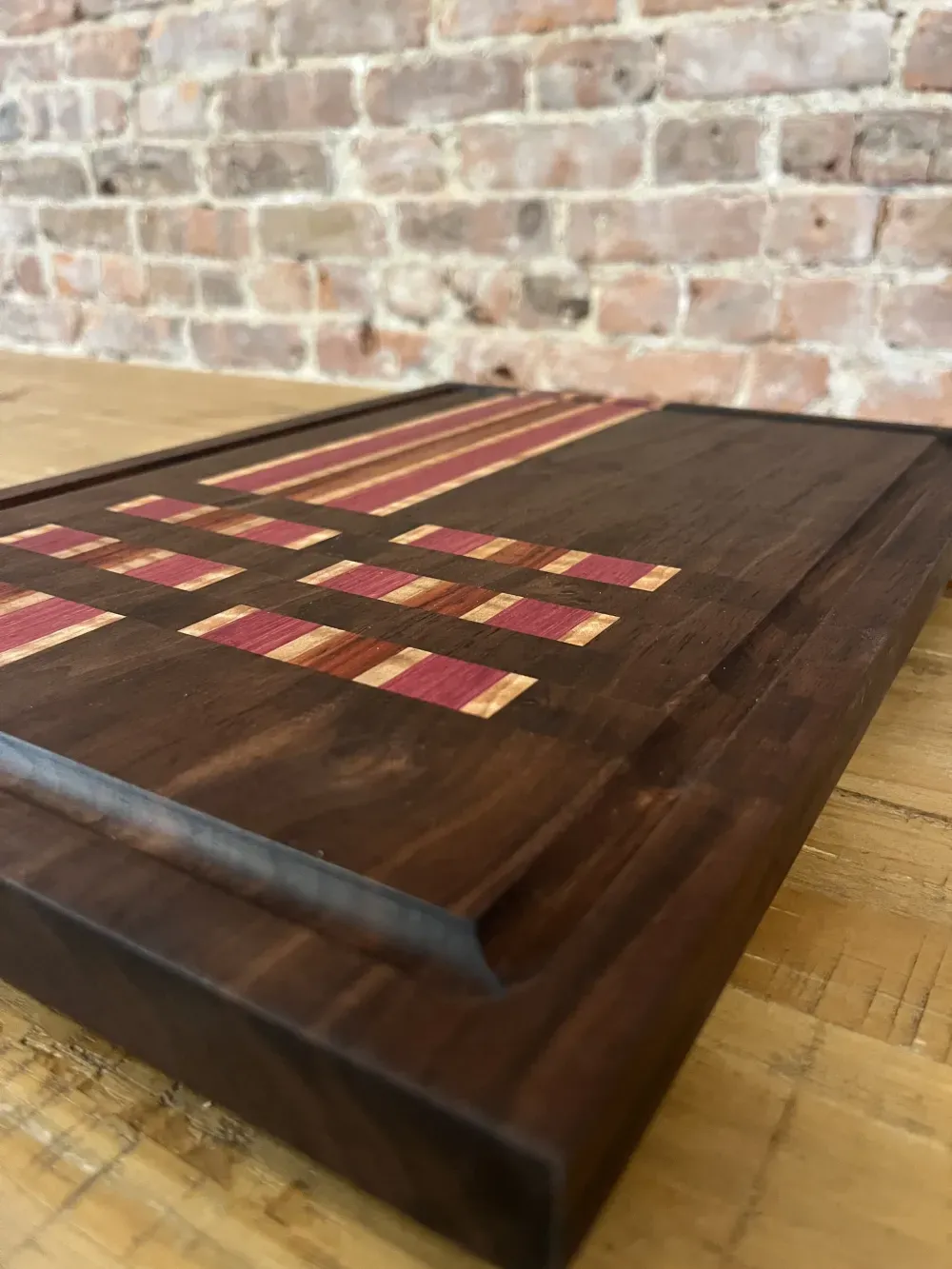
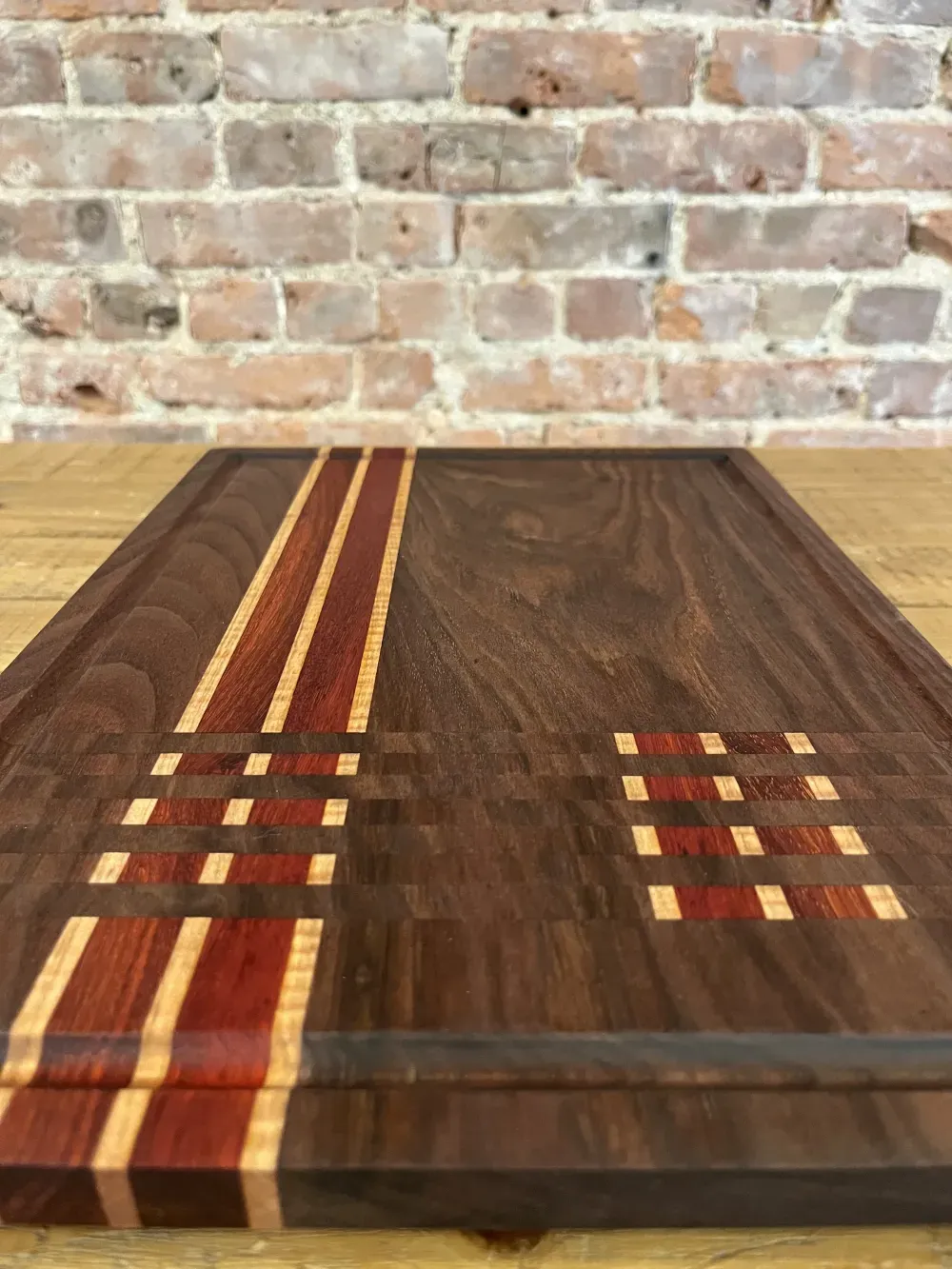
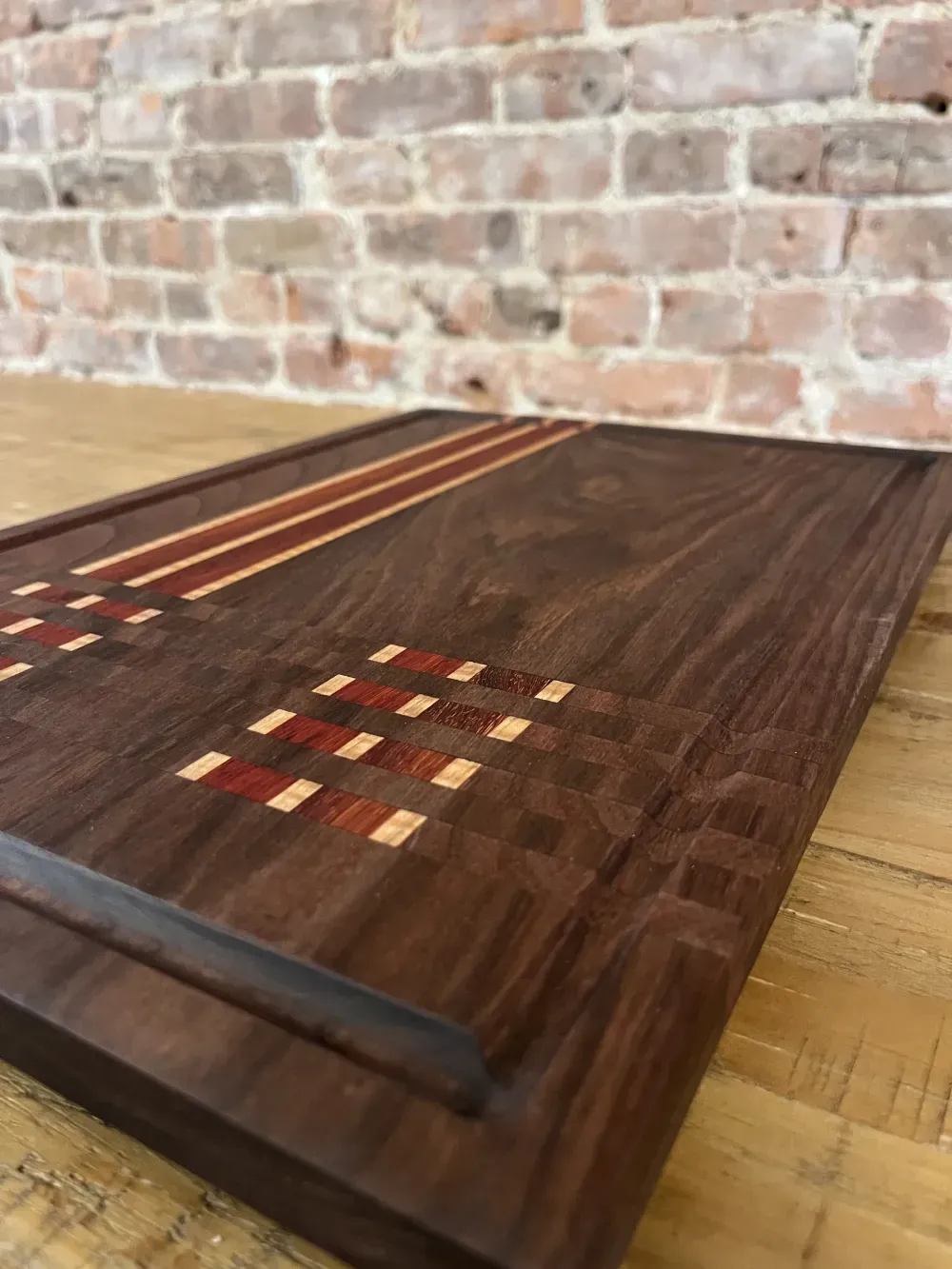
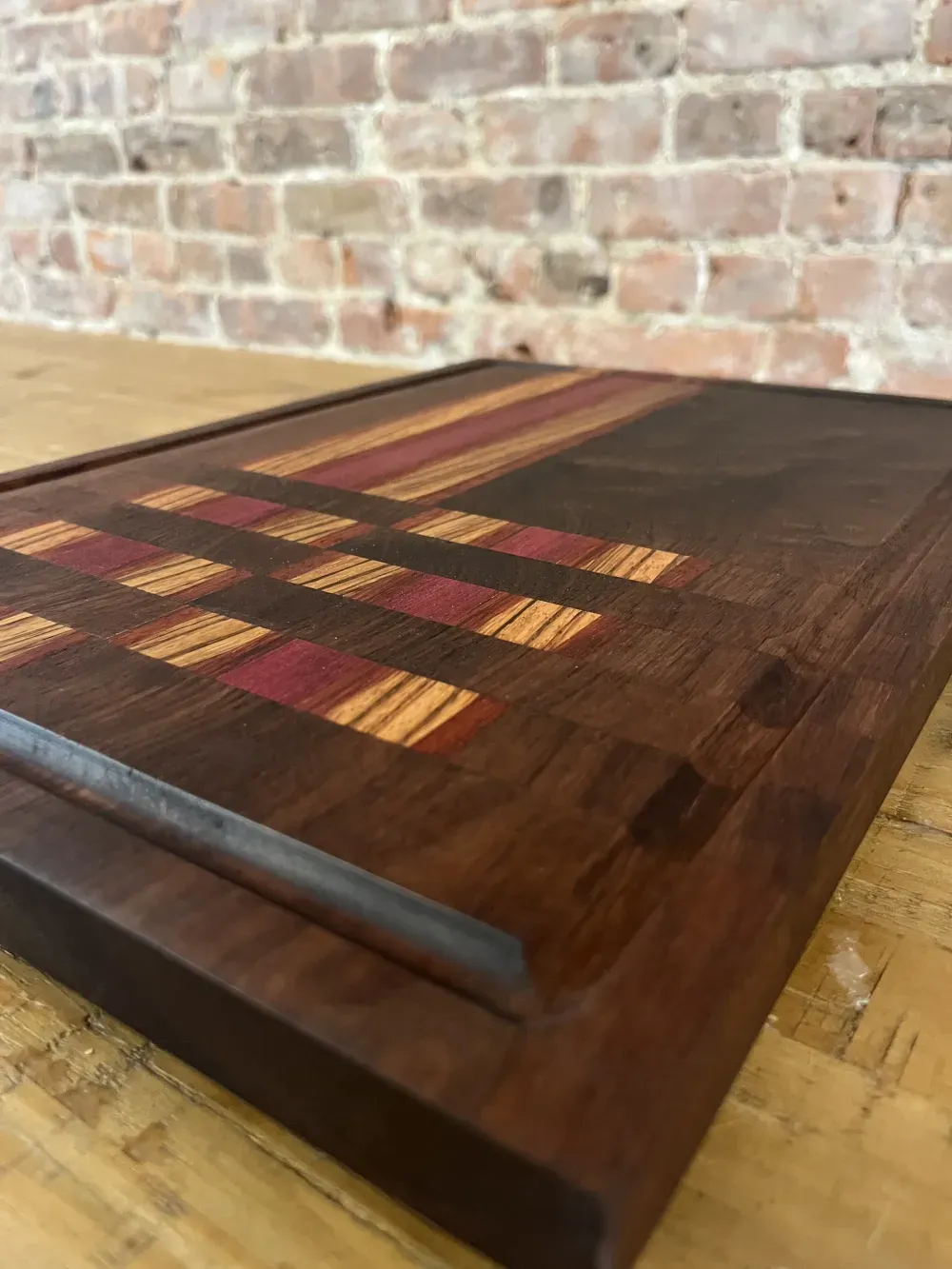
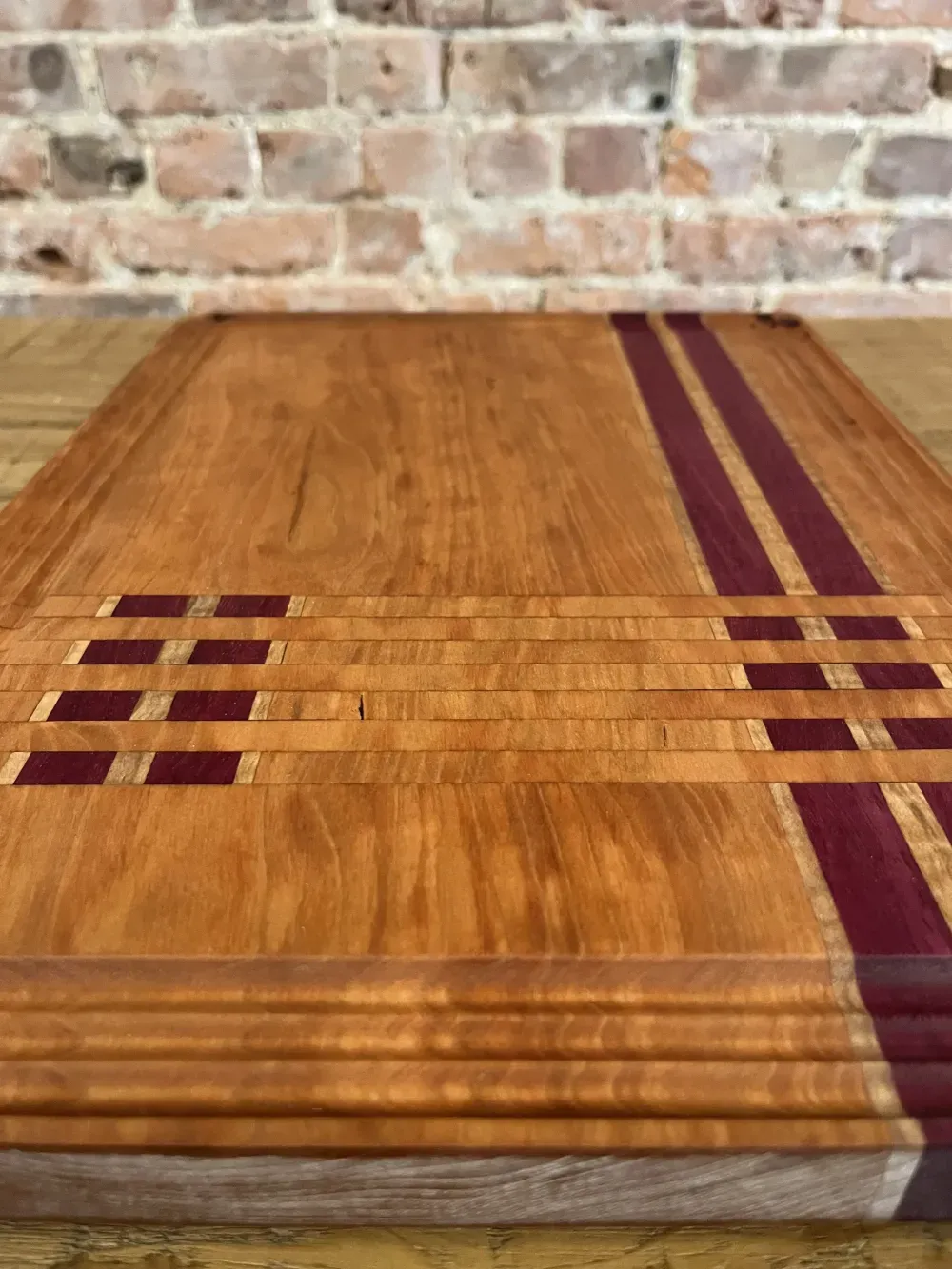
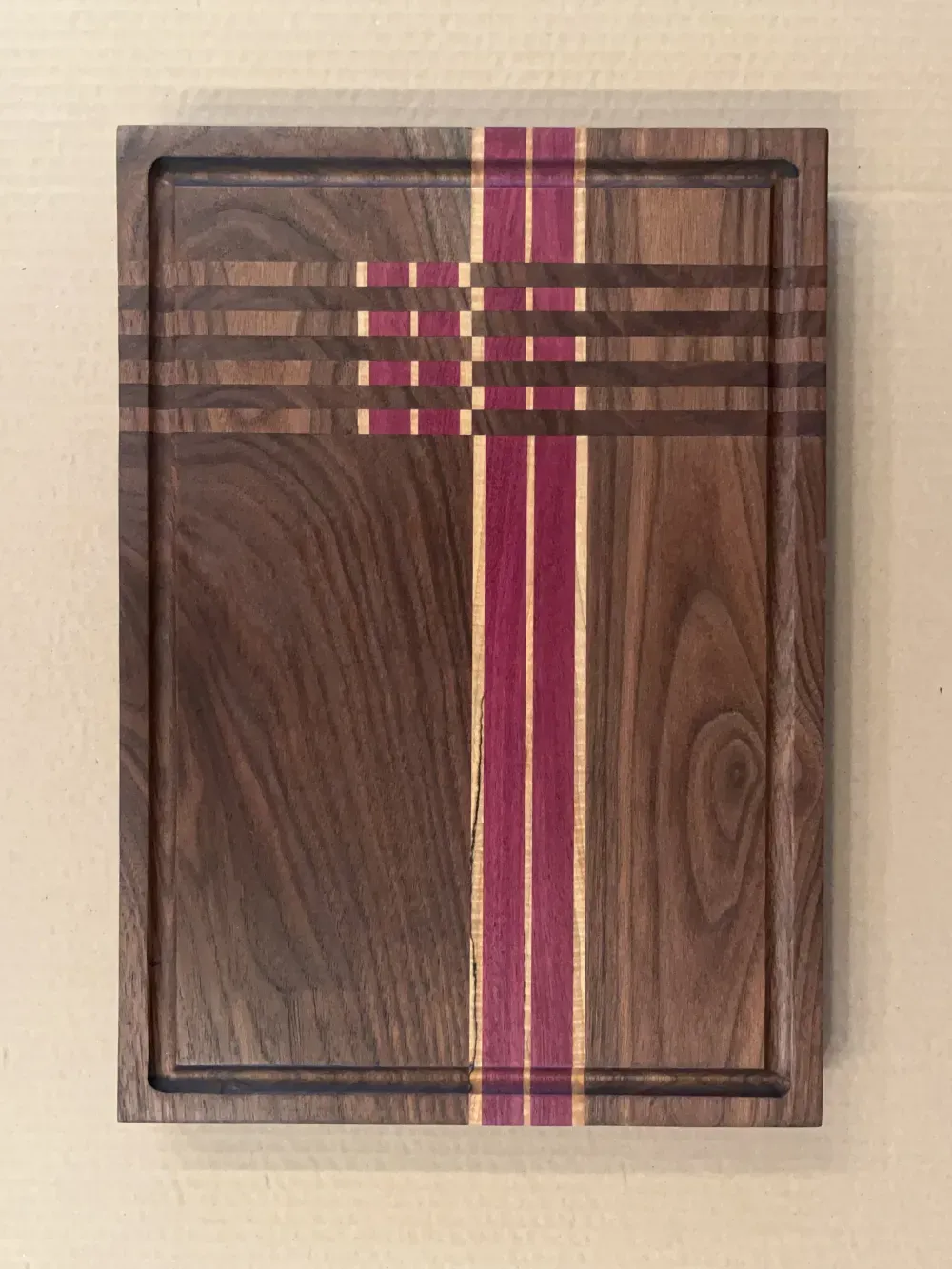
Not every board needs to move like water—some are built on rhythm instead. This collection takes the straight, confident line as its foundation: clean vertical stripes of contrasting hardwood running the full length of the board, evenly spaced and precisely fit. It’s the most architectural expression of the exotic-wood cutting board. Less landscape, more composition.
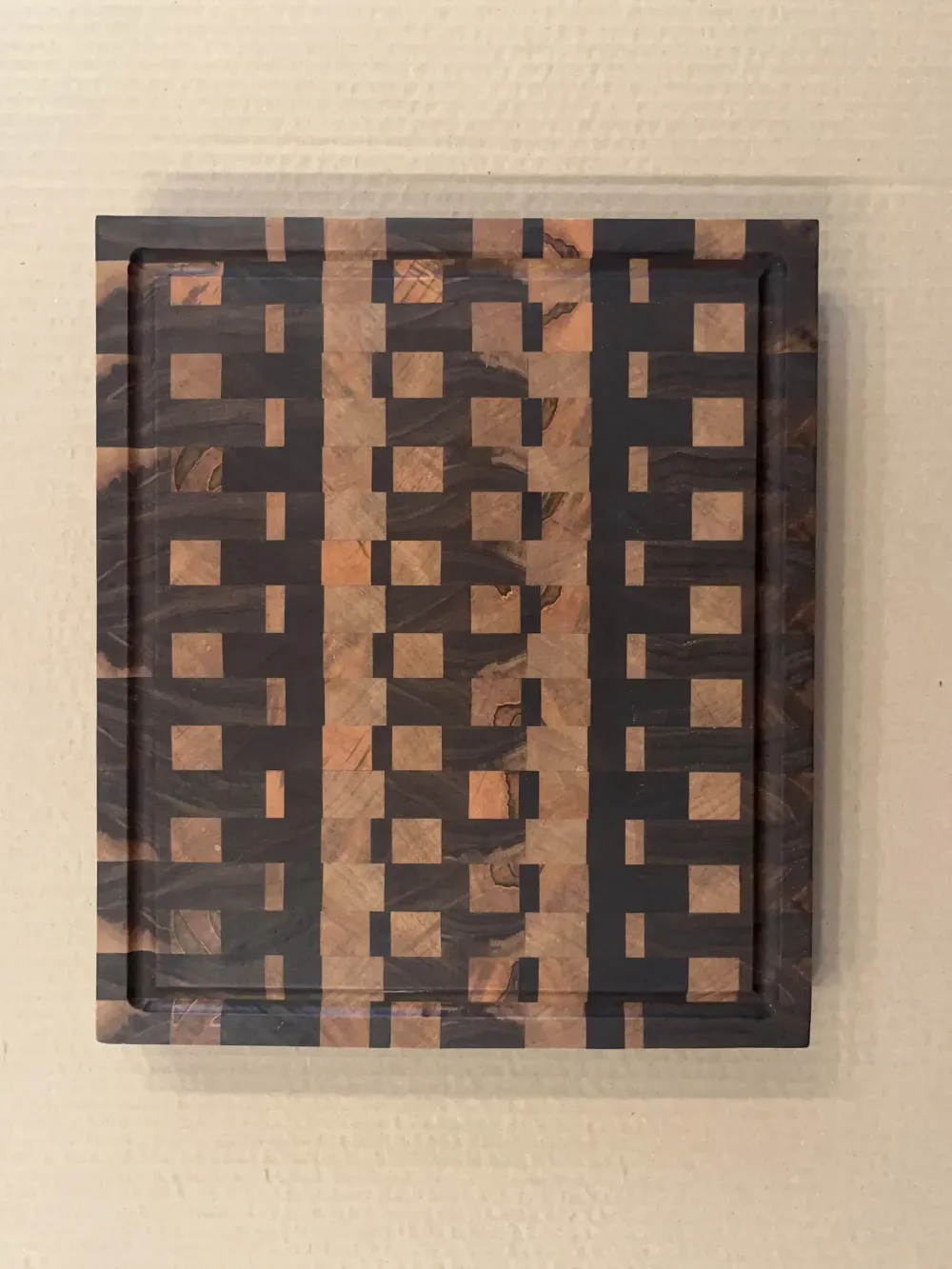
Within that structure, the pattern takes a few different forms. In its simplest version, it’s a bold, minimal run of color; one or two accent species striped cleanly through a solid field of Cherry or Walnut, evoking the graphic punch of a flag or a finish line. In its more elaborate form, the vertical stripes are interrupted by horizontal courses of the same accent woods, crossing the grain like the weft of a loom and creating a woven, basket-like texture where the stripes appear to pass over and under one another.












End-Grain Mosaic Boards
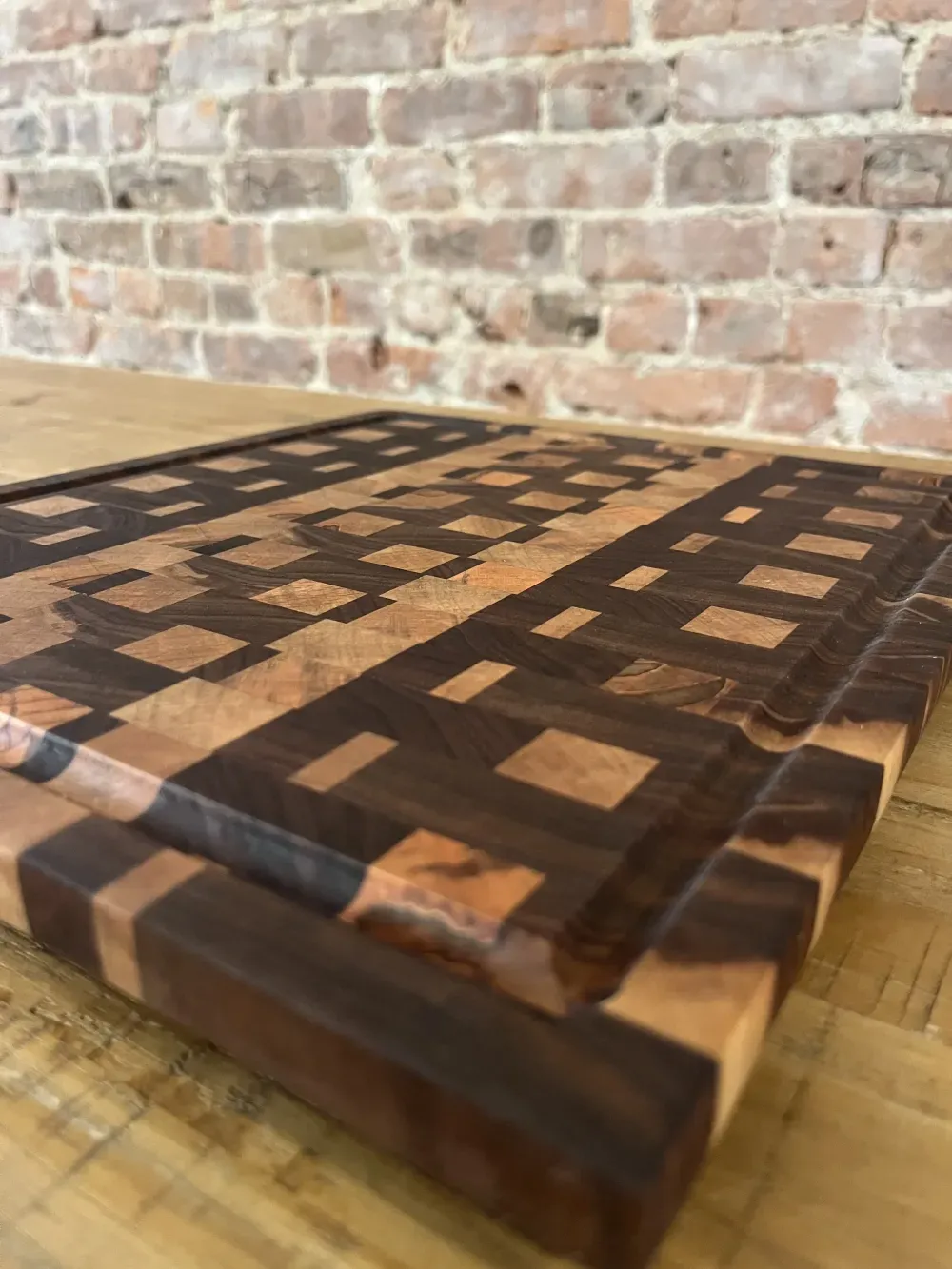
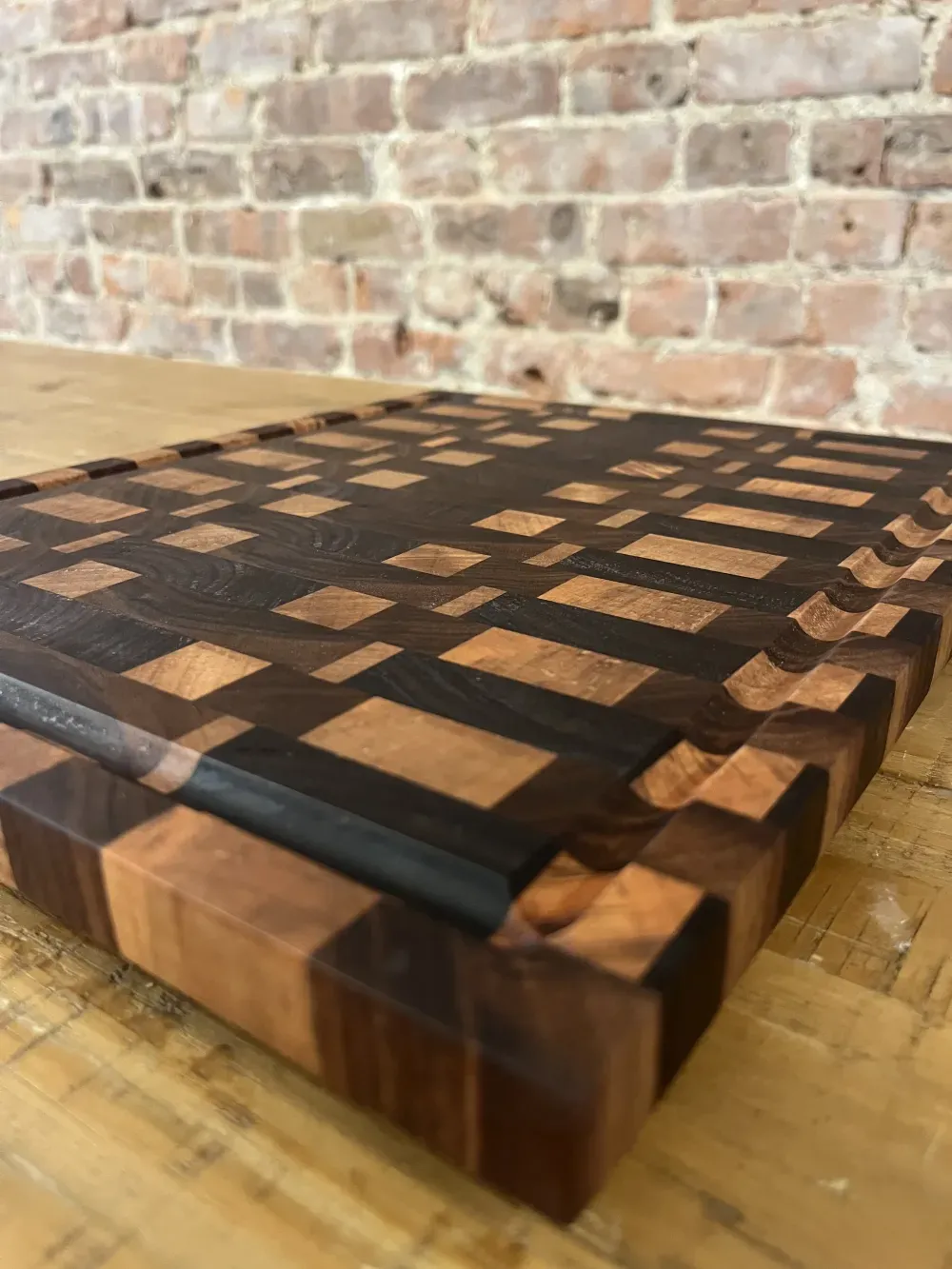
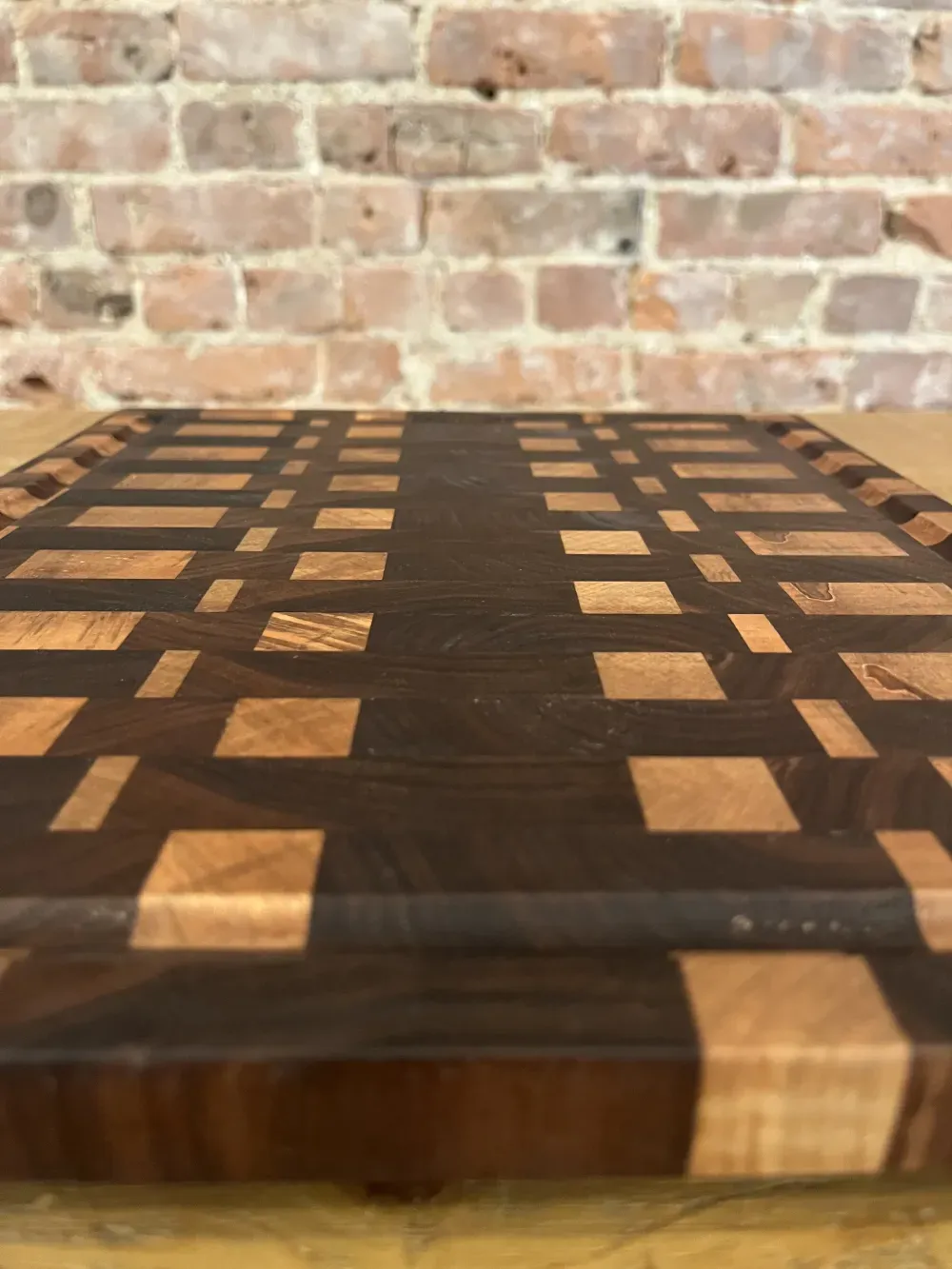
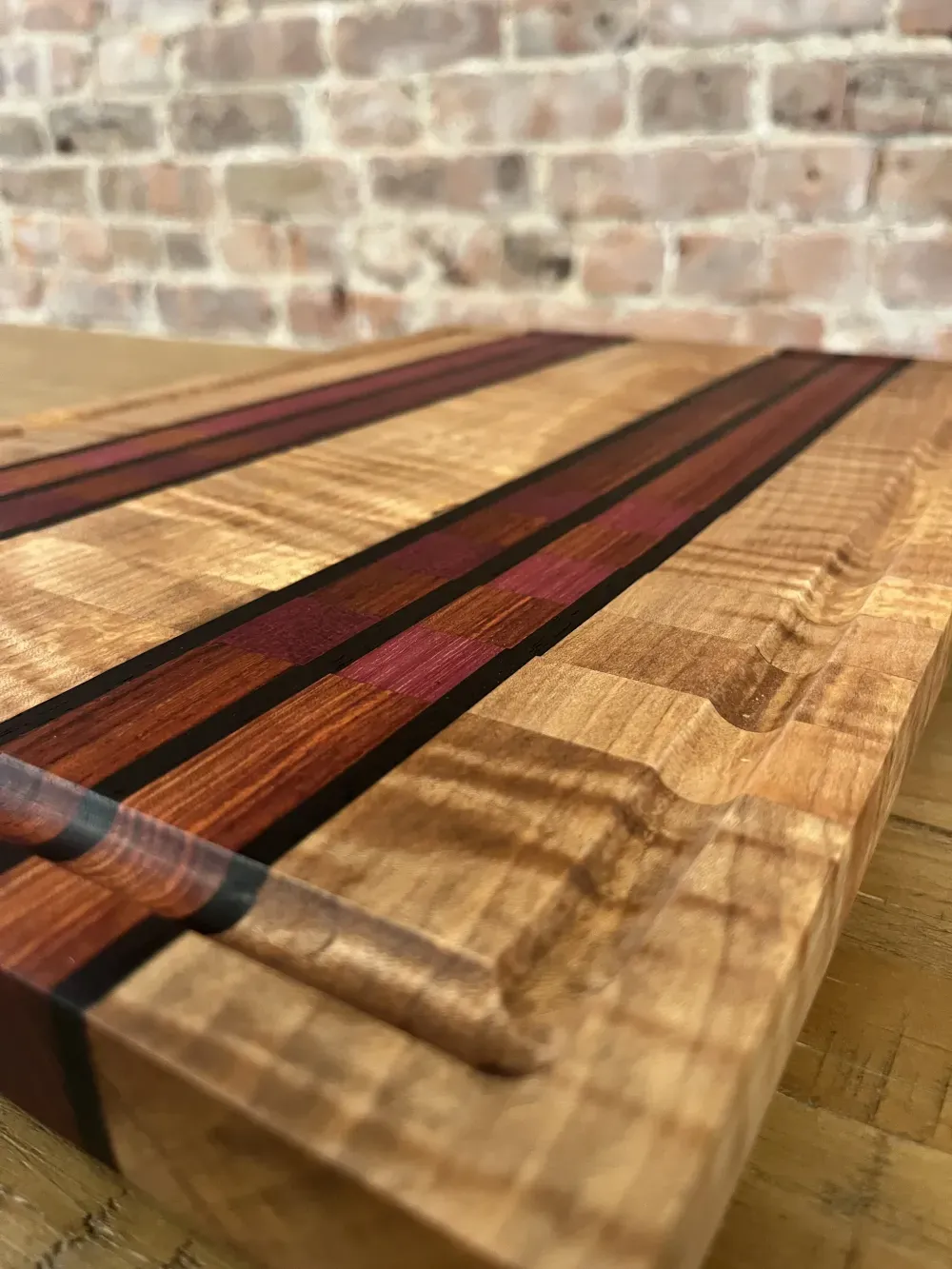
These boards are built end-grain, which changes everything about how the pattern reads. Rather than long strips of face-grain color, each square is a small block of wood turned on its end — so what you see is the end of the grain itself, with all its swirl, figure, and depth. It’s a completely different kind of surface: less about color moving across the board, more about texture and dimension within the wood.
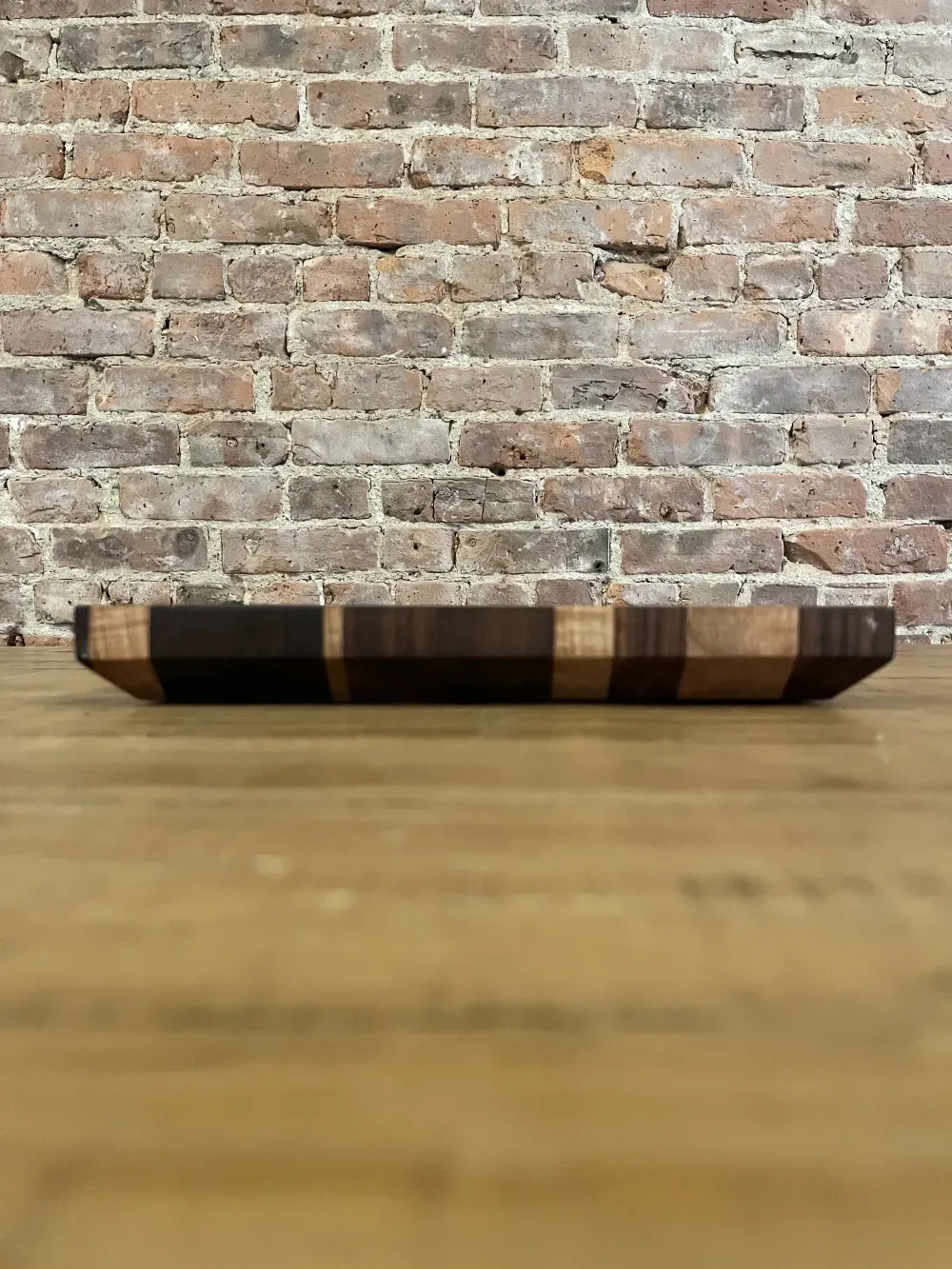
End-grain construction isn’t just about the look — it’s also the most functional cutting surface a board can have. The exposed end fibers act like tiny channels that close back up after a knife pass, making these boards gentler on blade edges and naturally more forgiving with everyday use.